
MOVIES AND TV SHOWS FILMED IN SEVILLE: A GUIDE TO THE REAL LOCATIONS

You may arrive in Seville for the first time and still feel that you have seen parts of the city before. Plaza de España, the Royal Alcázar and the narrow streets of the historic centre have appeared on screens around the world, sometimes as Seville itself and sometimes transformed into somewhere entirely different.
Over the decades, filmmakers have used Seville to recreate everything from Cairo and Jerusalem to the planet Naboo and the fictional kingdom of Dorne. Productions including Lawrence of Arabia, Star Wars: Episode II – Attack of the Clones, Kingdom of Heaven and Game of Thrones have all found their settings among the city’s palaces, squares and gardens.
But discovering movies and TV shows filmed in Seville is much more interesting when you can connect what appeared on screen with the real places behind it. Many of these filming locations are places you can visit today — and their actual history is often just as fascinating as the fictional worlds they represented.
In this guide, we’ll explore some of Seville’s most memorable filming locations, explain what was filmed there and show you how these places fit naturally into a visit to the city.
What movies and TV shows were filmed in Seville? Seville has appeared in major international productions including Lawrence of Arabia, Star Wars: Episode II – Attack of the Clones, Kingdom of Heaven, Knight and Day, Game of Thrones and The Crown, as well as Spanish productions such as La Peste and Grupo 7. Filming locations can be found across the Royal Alcázar, Plaza de España, the historic centre, the Guadalquivir riverfront and other parts of the city.
Plaza de España: From Lawrence of Arabia to Star Wars
Few filming locations in Seville are as instantly recognisable as Plaza de España. Built for the Ibero-American Exposition of 1929, its sweeping semicircular façade, bridges and tiled details have made it one of the city’s most distinctive landmarks — and an irresistible setting for filmmakers.
Long before it appeared in a galaxy far, far away, Plaza de España was transformed into Cairo for David Lean’s Lawrence of Arabia (1962). The film used the square’s grand architecture to represent the British military headquarters in Egypt, showing just how easily Seville could stand in for a completely different part of the world.
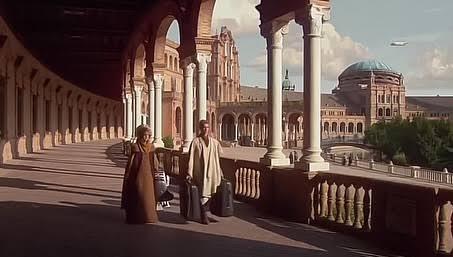
Four decades later, the plaza acquired an entirely different screen identity. In Star Wars: Episode II – Attack of the Clones (2002), it became part of Theed, the capital of the planet Naboo. Anakin Skywalker and Padmé Amidala walk through the plaza after arriving on Naboo, with digital effects extending and modifying the real architecture to create the fictional setting.
For visitors today, one of the pleasures is that the real filming location is remarkably easy to recognise. You can walk across the same bridges and galleries seen on screen while discovering a monument whose real story has nothing to do with distant planets: Plaza de España was designed by architect Aníbal González as one of the great centrepieces of Seville’s 1929 exposition.
The Royal Alcázar: Seville Becomes Dorne
If Plaza de España took Seville into outer space, the Royal Alcázar transported television audiences to Dorne. The palace complex became one of Seville’s most internationally recognisable filming locations when it appeared in HBO’s Game of Thrones.
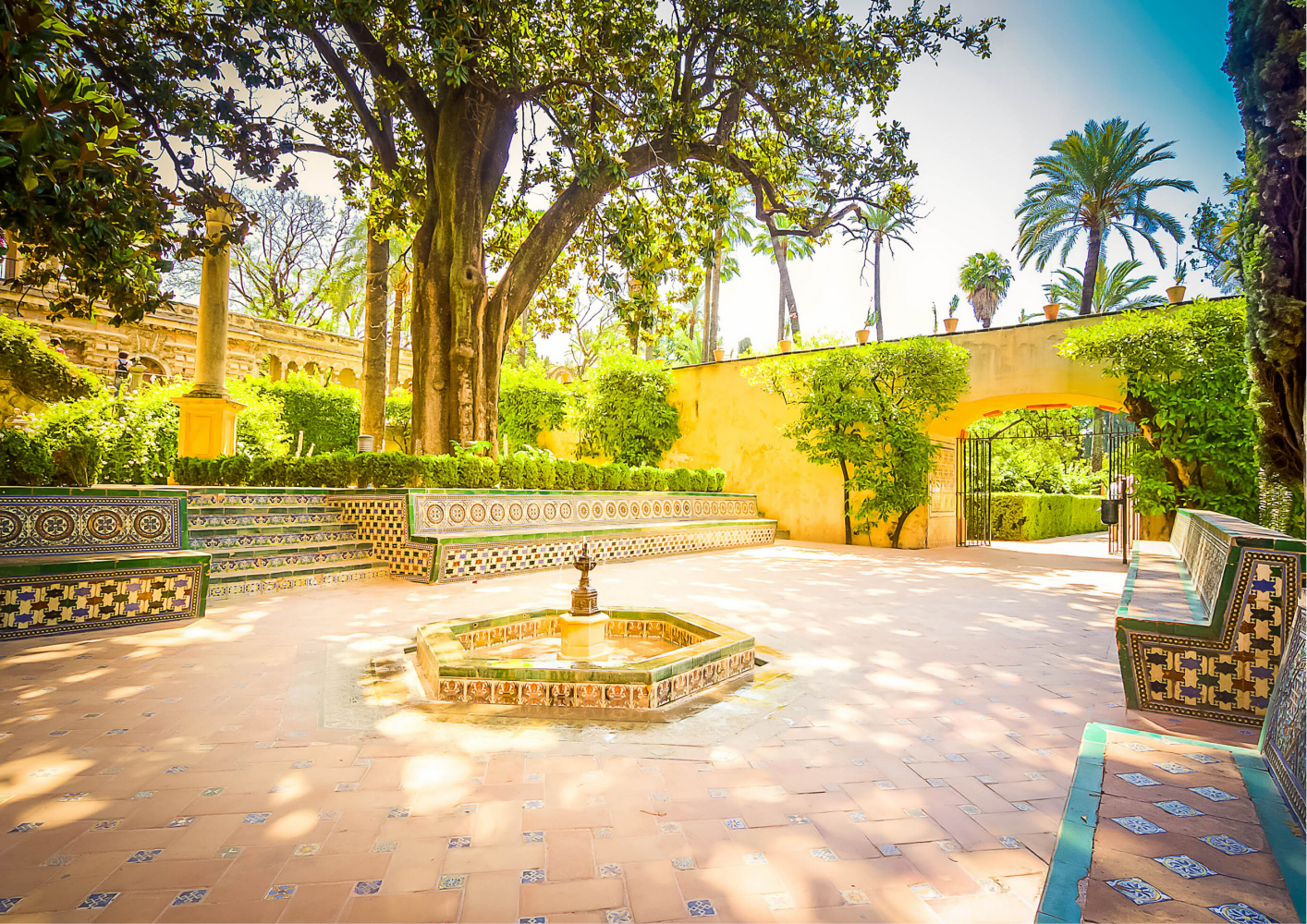
The Alcázar was used to represent the Water Gardens of Dorne, the private residence of House Martell. Rather than building an elaborate fictional palace from scratch, the production made use of real spaces within the monument, particularly its historic gardens and richly decorated interiors. For viewers familiar with Seville, the result is surprisingly recognisable.
Yet this is one of those occasions when the real history is even richer than the fictional one. The Alcázar is a complex shaped by centuries of Islamic and Christian rule, with successive monarchs transforming and expanding it over time. The Palace of Pedro I, its courtyards and gardens reveal layers of architecture and history that no television series could fully explain.
If Game of Thrones is one of the reasons the location caught your attention, we have a separate guide to the Game of Thrones filming locations in Seville, including the Alcázar scenes and other places used by the production. And if you visit the palace itself, looking beyond Dorne reveals why filmmakers were drawn to this extraordinary setting in the first place.
Lawrence of Arabia: When Seville Became the Middle East
Lawrence of Arabia did not use Seville for just one memorable scene. Several locations around the city were transformed into places thousands of kilometres away, demonstrating a versatility that would bring international film productions back to Seville decades later.
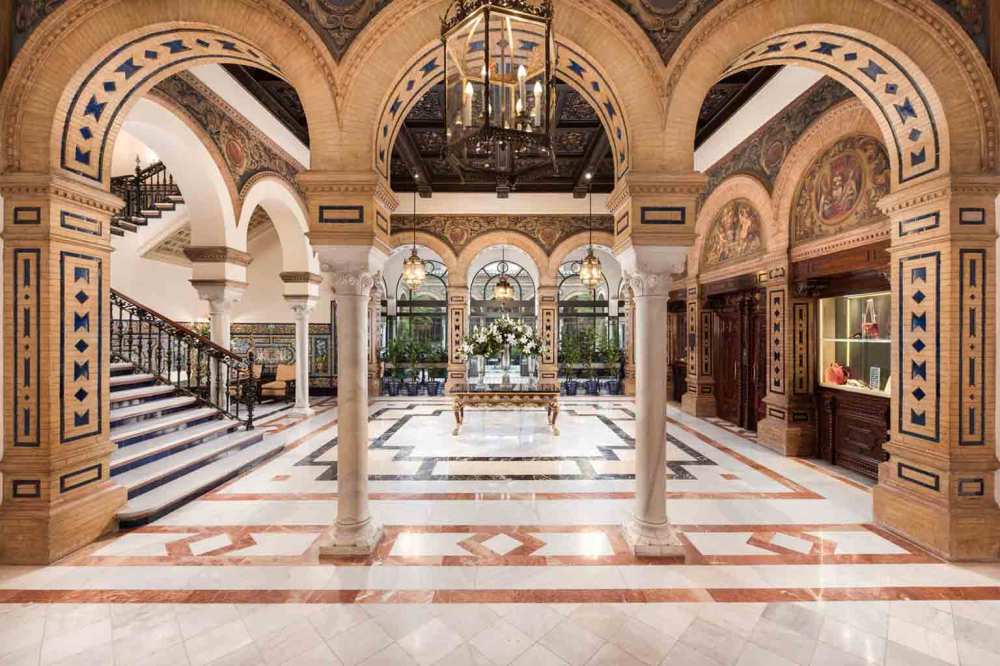
Plaza de España may be the easiest location to recognise, but the 1962 epic also made use of other monumental settings in Seville. The Real Casino de la Exposición and the Hotel Alfonso XIII were among the locations used during filming, allowing David Lean’s production to recreate different settings in the Middle East without leaving the city.
For modern visitors, this creates a particularly enjoyable contrast. These buildings belong to the same area of Seville shaped by the Ibero-American Exposition of 1929, so several places associated with the film can be encountered during a relatively short walk around the southern part of the historic centre.
It is also a reminder that Seville’s relationship with cinema began long before digital effects could transform a location. Filmmakers were already using the city’s architecture, light and monumental spaces to make one real place convincingly become another.
Kingdom of Heaven: Medieval Seville on the Big Screen
Ridley Scott also found in Seville the monumental architecture he needed for Kingdom of Heaven (2005), his epic set during the Crusades. Once again, the city was not necessarily playing itself: historic buildings in Seville were used to help recreate the medieval world of the film.
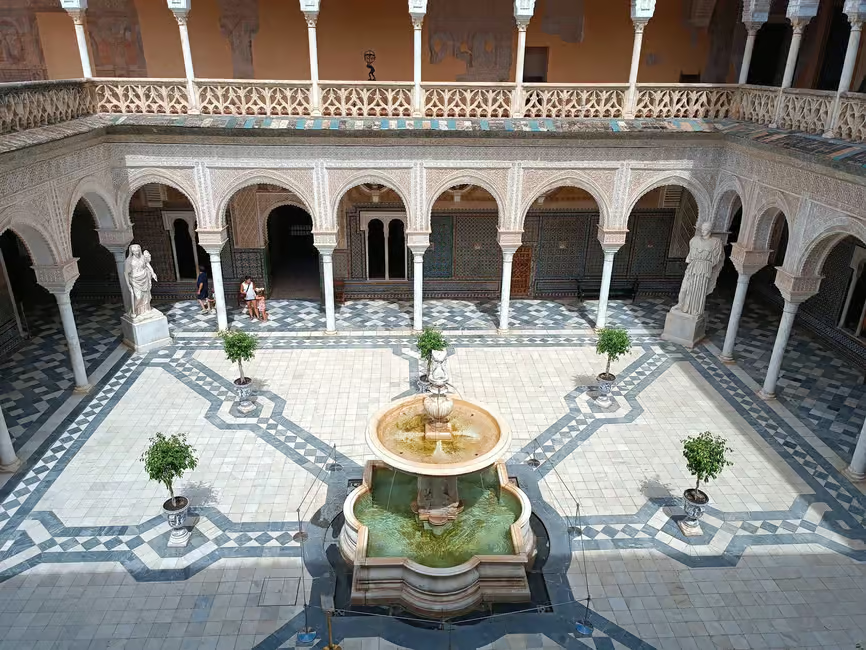
One of the most important locations was Casa de Pilatos, a remarkable palace in Seville’s historic centre. Its courtyards, galleries and combination of architectural influences provided a convincing backdrop for scenes set far from Andalusia.
Casa de Pilatos is particularly interesting because it remains slightly outside the itinerary of many first-time visitors. While the Alcázar and Cathedral attract most of the attention, this 16th-century palace is one of Seville’s architectural treasures, combining Mudéjar, Gothic and Renaissance elements around a series of elegant courtyards and gardens.
That makes it a perfect example of what makes exploring Seville’s filming locations so rewarding: following the movies can lead you to places you might otherwise have overlooked.
Knight and Day: Tom Cruise Takes Over Seville
Seville played a very different role in Knight and Day (2010), the action comedy starring Tom Cruise and Cameron Diaz. This time, the city was not transformed into an ancient kingdom or a distant planet: Seville itself became part of the action.
The film features a spectacular sequence through the historic centre, with motorcycles, narrow streets and some of Seville’s most recognisable architecture providing the backdrop. One of the locations that stands out is the area around the Cathedral and the Giralda, placing the action right in the monumental heart of the city.
There is, however, a detail that visitors should not take too literally. The film mixes Seville with traditions and visual elements from elsewhere in Spain, creating a cinematic version of the city rather than a completely accurate portrait of local culture. That contrast between the Seville on screen and the real Seville makes the locations even more fun to discover in person.
Today, walking around the Cathedral, Avenida de la Constitución and the surrounding streets makes it easy to understand why filmmakers choose this part of Seville: within just a few minutes, monumental architecture, historic streets and lively public spaces provide an extraordinary variety of settings.
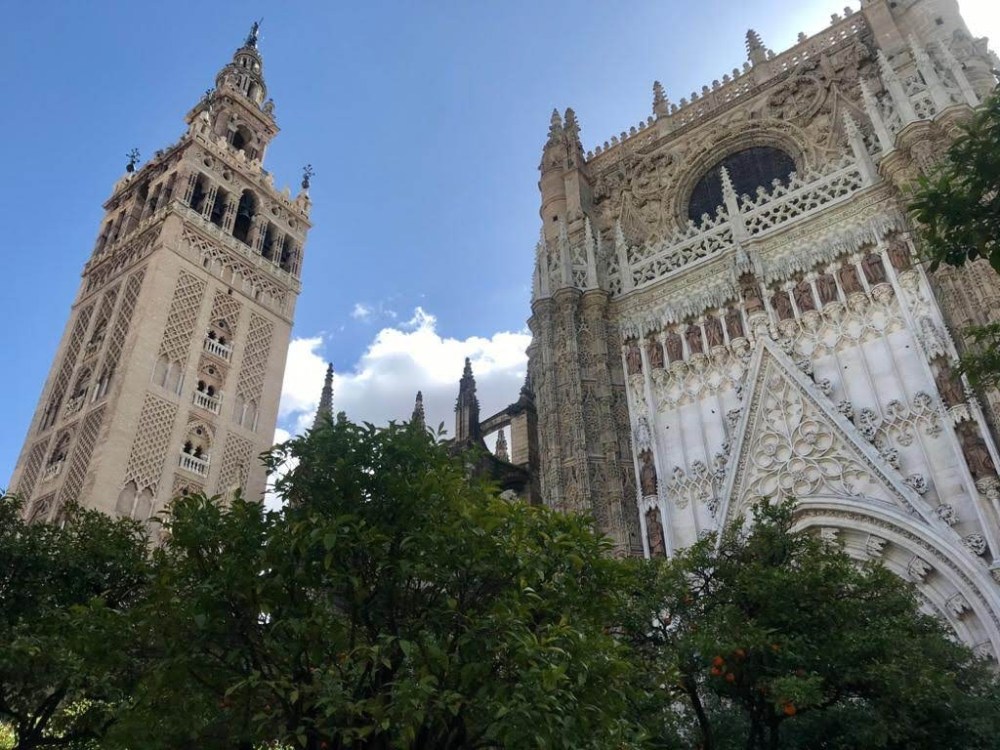
Seville’s Historic Centre: A Ready-Made Film Set
Not every filming location in Seville is hidden behind the gates of a palace. The historic centre itself has repeatedly attracted filmmakers, thanks to a combination of narrow streets, monumental architecture, small squares and an urban landscape that can change dramatically within just a few minutes on foot.
The streets around Santa Cruz and the former Jewish Quarter are particularly cinematic. Whitewashed houses, secluded plazas, orange trees and winding lanes create the kind of setting that requires surprisingly little transformation on screen. But these streets are more than an atmospheric backdrop: they form part of one of the most historically complex areas of Seville.
That is worth remembering when searching for filming locations. A picturesque alley may look like a ready-made film set, but the stories behind these streets stretch back centuries, through Seville’s medieval Jewish community, the transformations that followed the late Middle Ages and the later reinvention of Santa Cruz as one of the city’s most recognisable neighbourhoods.
Exploring this part of Seville therefore offers something a film or television production cannot: the opportunity to look beyond the scenery and understand why the city looks the way it does today.
The Crown: When Seville Stood In for Los Angeles
Seville’s ability to impersonate other parts of the world continued with Netflix’s The Crown. During the third season, the production came to Andalusia to recreate part of Princess Margaret and Lord Snowdon’s tour of the United States — and one of Seville’s most famous hotels found itself playing a very different role.
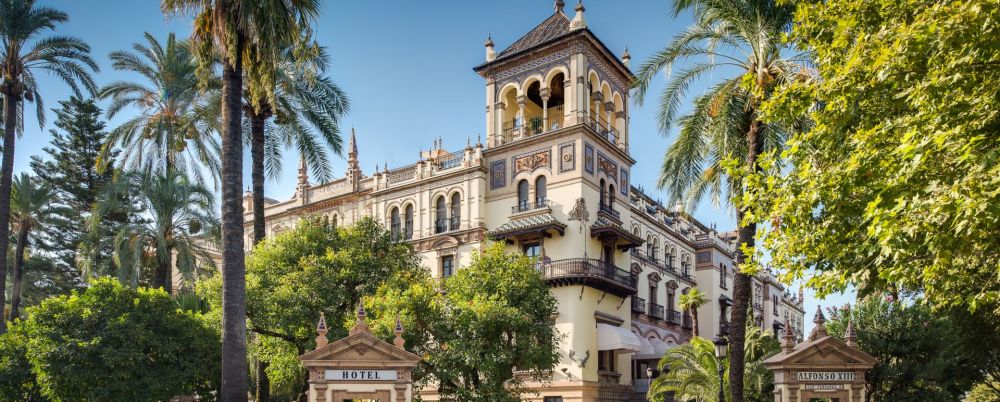
The Hotel Alfonso XIII was transformed into the Beverly Hills Hotel in Los Angeles, with its elegant interiors, central courtyard and unmistakable architecture appearing on screen during the royal couple’s American trip. For viewers who know Seville, spotting such a recognisable local landmark pretending to be California adds another layer to the scene.
There is a nice irony here. The hotel was built to accommodate distinguished international visitors arriving for the 1929 Ibero-American Exposition, and almost a century later its architecture was being used to recreate the glamorous world of an international royal tour.
It also means that one relatively small area of Seville connects several very different screen worlds. Around Hotel Alfonso XIII, Plaza de España and María Luisa Park, visitors can find locations associated with productions ranging from Lawrence of Arabia and Star Wars to The Crown — all within walking distance of one another.
Berlin: When Seville Plays Itself
After decades of standing in for Cairo, Naboo, Dorne and even Los Angeles, Seville finally gets to play itself in Berlin and the Lady with an Ermine, the second instalment of Netflix’s Money Heist spin-off.
This time, the city is not simply an attractive backdrop. Seville forms an important part of the story, as Berlin and his gang reunite for a new heist. The production uses both famous landmarks and less obvious corners of the city, creating a version of Seville that visitors can actually recognise and explore.
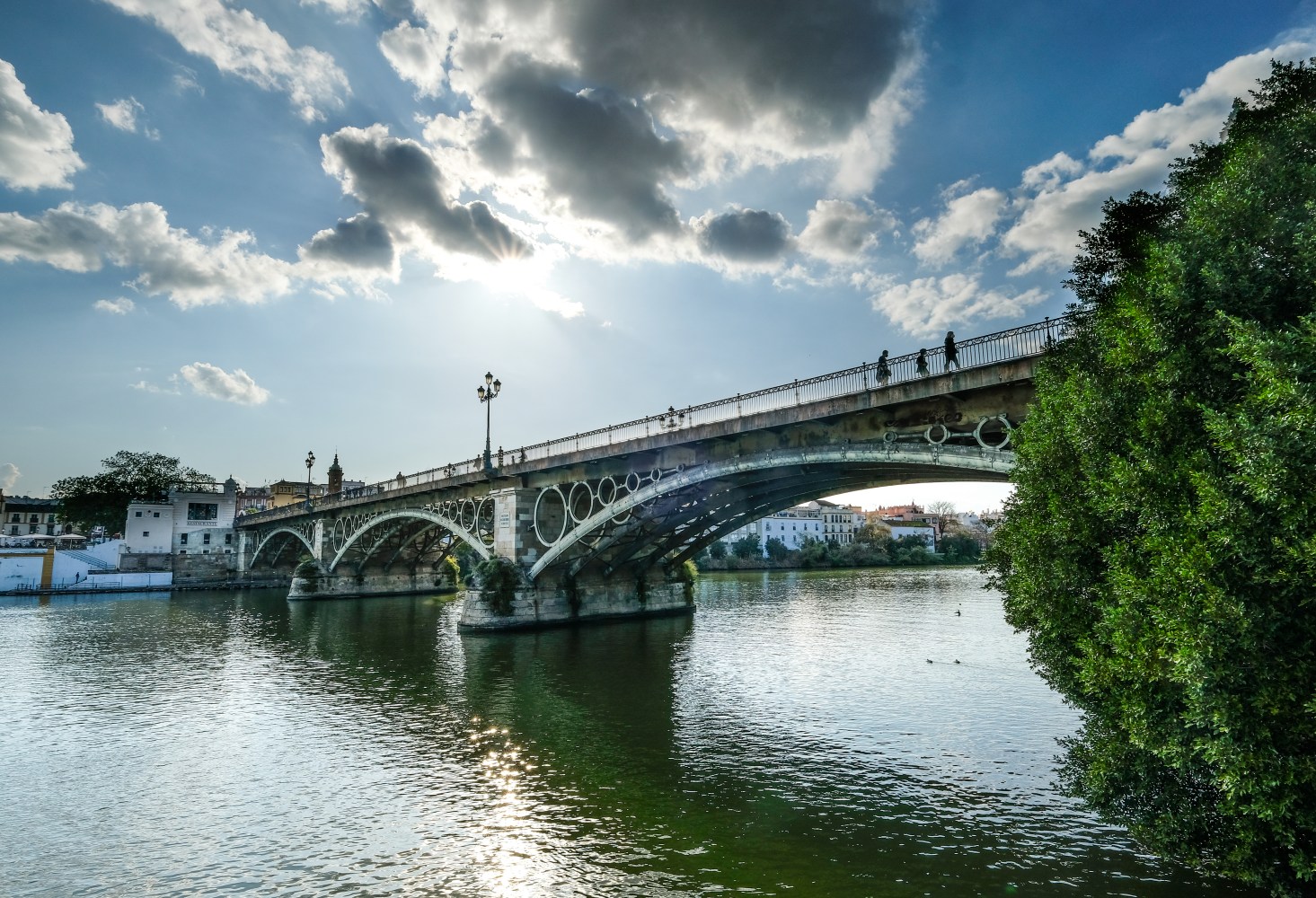
Among the filming locations are the Triana Bridge, the Torre del Oro, the Guadalquivir riverfront, Patio de Banderas, María Luisa Park and the historic centre. The Palacio del Marqués de la Motilla, with its unusual neo-Gothic appearance, also plays a particularly prominent role in the story.
What makes these locations especially interesting for travellers is how naturally they connect different sides of the city. Following them can take you from monumental Seville to the river and across into Triana — turning a search for filming locations into a surprisingly good introduction to Seville itself.
La Peste: Recreating 16th-Century Seville
Few productions have used Seville as extensively as La Peste, the Spanish historical thriller created by Alberto Rodríguez and Rafael Cobos. Rather than asking the city to impersonate somewhere else, the series attempted something more ambitious: to bring 16th-century Seville back to life.
Set at a time when Seville was one of Europe’s great commercial centres and the gateway to trade with the Americas, the series combines crime and political intrigue with the outbreak of an epidemic. Filming spread across more than 130 locations, using real streets, palaces and historic spaces throughout Seville and the surrounding province.
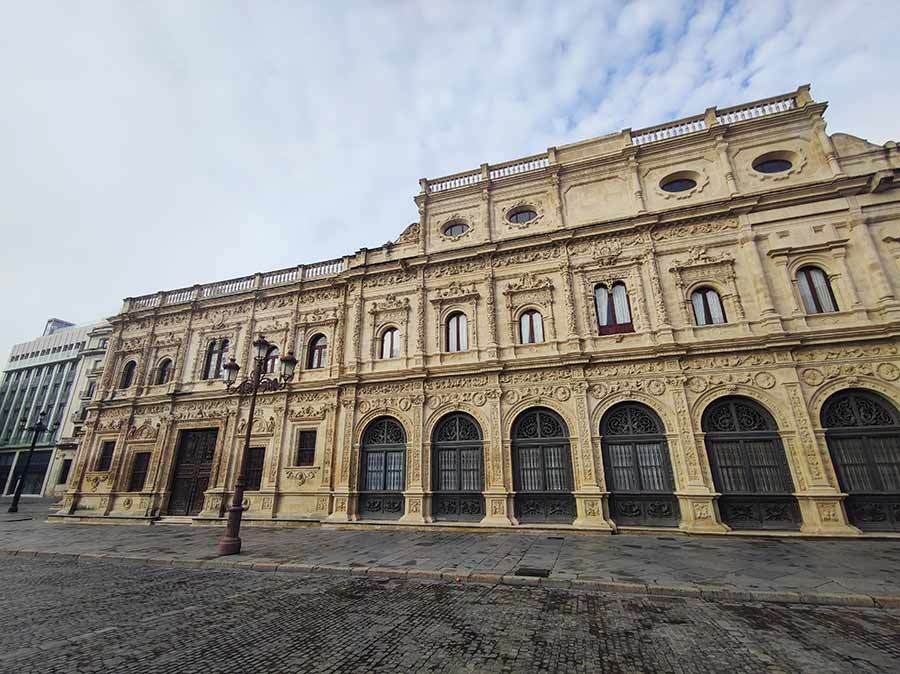
Some of the places connected with the production are surprisingly familiar to modern visitors, including Plaza de San Francisco, the Cathedral area, the Casa de la Moneda and locations around Triana. The challenge was not finding historic architecture, but making a living 21st-century city convincingly resemble the crowded, prosperous and deeply unequal Seville of the 1500s.
For travellers interested in history, La Peste offers a different way of looking at the city. The filming locations are not interesting simply because a television series was made there; many of them are places where the history portrayed on screen actually unfolded. That makes the boundary between filming location and historical site unusually thin.
Grupo 7: A Very Different Side of Seville
Seville does not always appear on screen through palaces, gardens and postcard views. In Grupo 7 (2012), director Alberto Rodríguez used the city to tell a much grittier story, set during the years leading up to the 1992 Universal Exposition.
The film follows a police unit fighting drug trafficking in late-1980s Seville, at a moment when the city was preparing for one of the biggest transformations in its modern history. Instead of presenting the polished monumental centre familiar to most visitors, Grupo 7 explores neighbourhoods, streets and urban spaces rarely associated with the tourist image of Seville.
That contrast is part of what makes the film so interesting today. Expo ’92 changed infrastructure, transport and entire areas of the city, while Grupo 7 captures a fictional story against the backdrop of the Seville that existed just before that transformation.
Together with productions such as La Peste, it demonstrates something important about Seville as a filming location: filmmakers are not drawn here only by the Alcázar or Plaza de España. The city can represent very different periods, social realities and visual identities — sometimes without pretending to be anywhere else.
Can You Visit Seville’s Filming Locations?
Yes — many of Seville’s best-known filming locations can easily be visited, and several are surprisingly close to one another. Plaza de España, the Royal Alcázar, the Cathedral area, Santa Cruz, Hotel Alfonso XIII and the Guadalquivir riverfront can all form part of a normal sightseeing itinerary through the city.
Some locations, such as Plaza de España, the streets of Santa Cruz and the riverfront, can be explored freely. Others are inside monuments or historic buildings and require admission. The Royal Alcázar, for example, is both one of Seville’s most important monuments and the setting used for Dorne in Game of Thrones, so it is worth visiting for far more than its television connection.
You also do not need to spend an entire day following a dedicated filming-location route. One of the advantages of Seville is that many screen locations overlap naturally with the places most travellers already want to see. A walk from the Cathedral and Alcázar through Santa Cruz can be combined with Plaza de España and María Luisa Park, while the river leads towards the Torre del Oro, Triana Bridge and Triana itself.
If cinema first brings your attention to these places, let it be the beginning rather than the end of the story. The fictional worlds may be what you recognise, but the architecture, people and centuries of history behind them are what make the real Seville worth exploring.
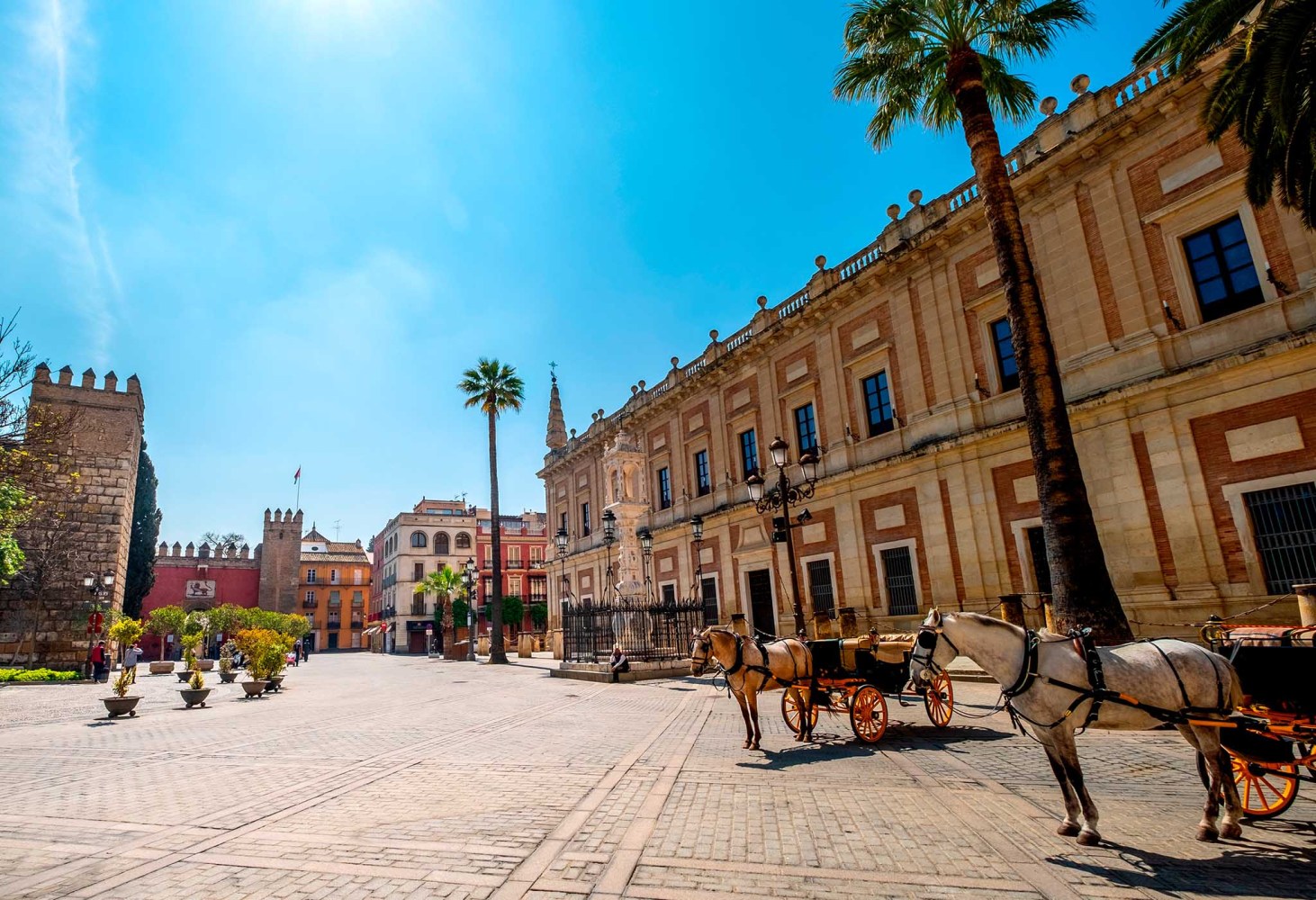
A Walking Route Through Seville’s Filming Locations
One of the best things about exploring Seville’s filming locations is that you do not need a car — or even a particularly complicated itinerary. Many of the places featured on screen are concentrated around the historic centre and can be connected naturally on foot.
A good starting point is Plaza de España, where Lawrence of Arabia and Star Wars: Episode II – Attack of the Clones created two completely different worlds from the same extraordinary setting. From there, walk through María Luisa Park towards the Hotel Alfonso XIII, another location with its own screen history in productions including Lawrence of Arabia and The Crown.
Continue towards the Cathedral and the Royal Alcázar, bringing together the action of Knight and Day with the gardens and palaces that became Dorne in Game of Thrones. From Patio de Banderas, it takes only a few steps to enter Santa Cruz, where the maze of streets provides a very different kind of cinematic scenery.
From the historic centre, finish by walking towards the Torre del Oro and the Guadalquivir River. Following the river towards Triana Bridge connects the monumental city with another side of Seville and completes a route through locations that have appeared in productions made decades apart.
The route works because it is not really a detour from sightseeing at all. Most of these filming locations are also among the places that help explain Seville itself, so even travellers who have never seen every film or series mentioned in this guide will find plenty worth discovering along the way.
Seville: A City Made for the Screen
From the deserts of Lawrence of Arabia to the planet Naboo in Star Wars and the Water Gardens of Dorne in Game of Thrones, Seville has spent decades becoming somewhere else on screen. Kingdom of Heaven, Knight and Day and The Crown continued that tradition, while productions such as La Peste, Grupo 7 and Berlin have used the city to tell stories in which Seville itself plays a much more recognisable role.
That means visitors looking for movies and TV shows filmed in Seville can find locations across remarkably different parts of the city: Plaza de España, the Royal Alcázar, Hotel Alfonso XIII, Santa Cruz, the Cathedral area, the Guadalquivir riverfront and Triana are just some of the places that have appeared on screen.
But perhaps the most interesting part comes after recognising them. Plaza de España is much more than Naboo, the Alcázar has a story far older than Dorne, and the streets of Seville were fascinating long before a camera arrived. Film can provide a reason to look at a place — history gives you a reason to understand it.
So, when you encounter somewhere in Seville that looks strangely familiar, there may be a good reason. You might have seen it before without ever knowing its name. And now that you are here, the real city is waiting behind the screen.