
WHY SEPTEMBER AND OCTOBER MAY BE THE BEST TIME TO VISIT SEVILLE
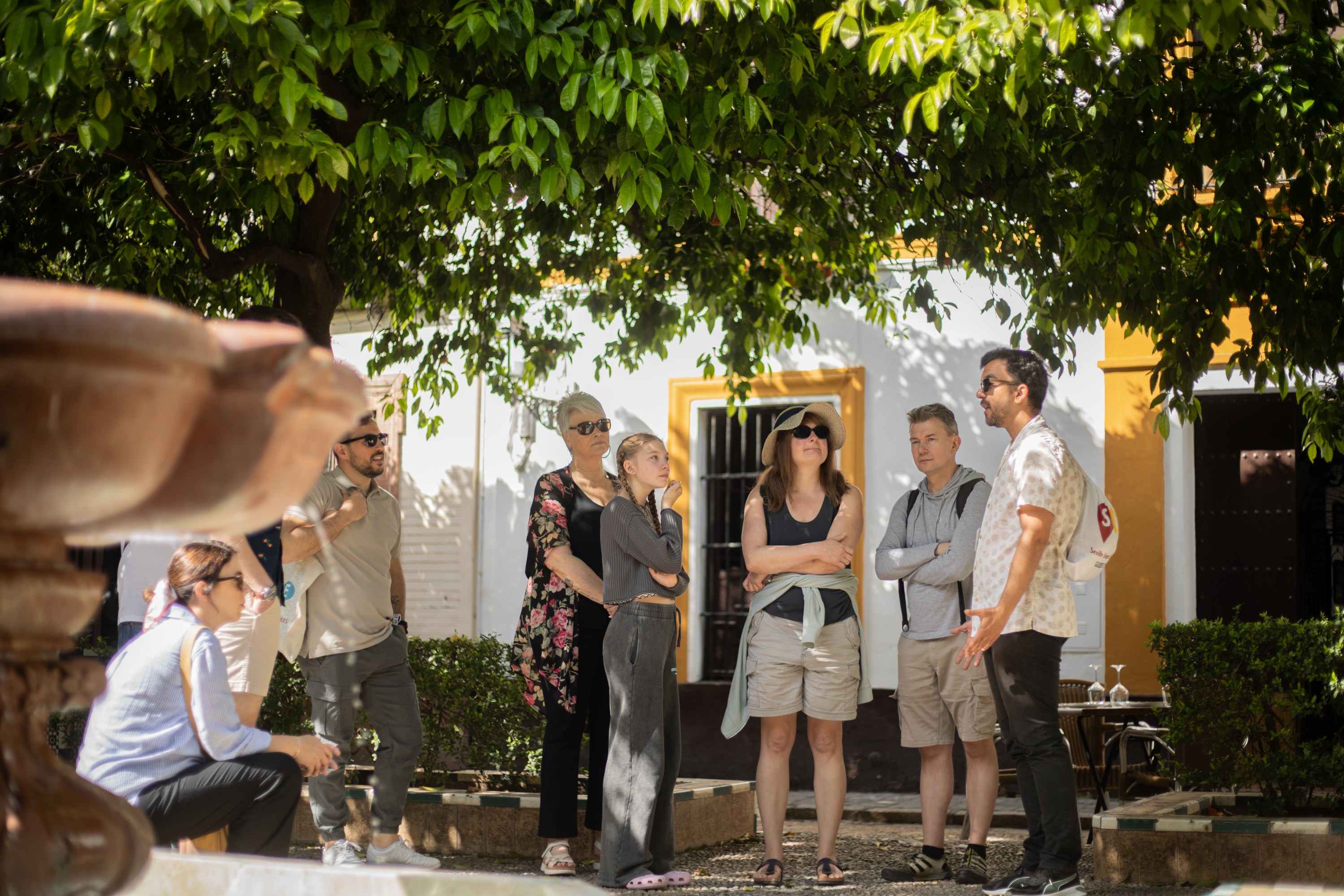
Ask when the best time to visit Seville is and you will usually hear the same answers: spring for the orange blossom and the city’s great festivals, or winter for mild temperatures and fewer visitors. Both are good choices. But there is another period that deserves much more attention, particularly if you want to spend most of your time actually exploring the city rather than planning your days around the heat: September and October.
Late summer and early autumn bring a gradual change of rhythm to Seville. The intense temperatures of July and August begin to ease, evenings become increasingly pleasant, cultural life returns in force and the city starts to feel active again after the quieter summer period. There are still plenty of visitors, particularly around the major monuments, but you are experiencing Seville at a time when walking, eating outdoors and spending an evening in the city become enjoyable parts of the trip rather than logistical challenges.
If you are considering an autumn trip, here is why September and October may be two of the best months to experience Seville — and how to make the most of them.
The Weather Finally Works in Your Favour
There is no point pretending that summer in Seville is simply “a little hot”. July and August can be extremely hot, and although the city continues to function, sightseeing requires considerably more planning. Early starts, long breaks around the hottest hours and plenty of water are not just good travel advice; they can determine how much you actually enjoy your day.
September is a transition month. The beginning can still feel very much like summer and occasional periods of intense heat are perfectly possible, so it would be a mistake to promise mild weather from the moment the calendar changes. As the month progresses, however, conditions generally become much better suited to exploring on foot. October takes that transition further, with cooler days and evenings and a greater possibility of rain, but usually without the cold that can make outdoor sightseeing less appealing elsewhere in Europe.
That matters particularly in a city like Seville. Many of its best experiences happen between the major attractions: walking through Santa Cruz, following the river towards Triana, crossing María Luisa Park or simply stopping for a drink when you find a square you like. When you no longer have to treat every patch of shade as part of your itinerary, the city becomes much easier to enjoy at your own pace. For practical information on temperatures, transport, neighbourhoods and planning your stay, our Seville Travel Guide brings together the essentials in one place.
Seville Comes Back to Life After Summer
The improvement in the weather coincides with something equally important: the return of the city’s cultural calendar. September is not simply a quieter version of spring. The rhythm is different, and in some years the programme is exceptional.
That is particularly true in 2026, when the Bienal de Flamenco runs from 9 September to 3 October. More than seventy performances are scheduled across the festival, bringing together established artists, new productions and different approaches to flamenco in venues throughout the city. Even if you do not attend a performance, visiting during the Bienal is an opportunity to encounter flamenco as part of a much broader cultural conversation rather than simply choosing a tourist show because it appears on a list of things to do in Seville.
September also overlaps with the final weeks of the summer programme at the Royal Alcázar, while exhibitions, concerts and other events gradually lead into an equally active October. This is one reason we always recommend checking the official Seville cultural calendar shortly before travelling rather than relying entirely on a guidebook published months or years earlier. The Cathedral and Alcázar will still be there on your next visit; a performance, temporary exhibition or neighbourhood event may not be.
You Can Spend More of the Day Outdoors
Better temperatures do more than make sightseeing comfortable. They change how you can structure an entire day in Seville.
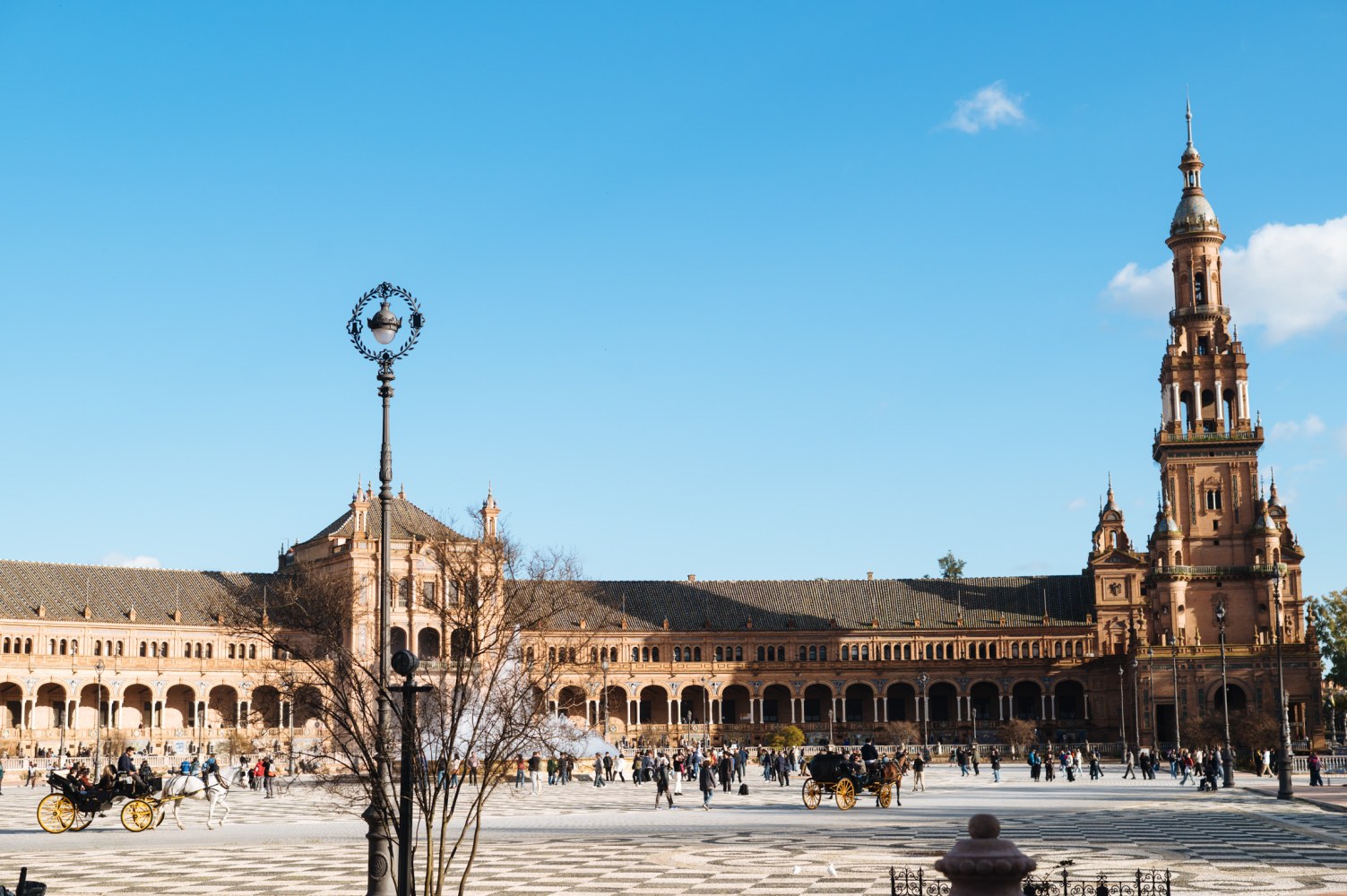
Instead of trying to fit outdoor activities into the first few hours of the morning, September and October allow much greater flexibility. You might visit the Cathedral in the morning, spend the afternoon walking through María Luisa Park and Plaza de España, and continue towards the river without feeling that every part of the itinerary needs to be timed around the temperature. Our Monumental Highlights walking tour follows precisely this part of the city, connecting the historic centre with San Telmo, the former Tobacco Factory, María Luisa Park and Plaza de España entirely outdoors.
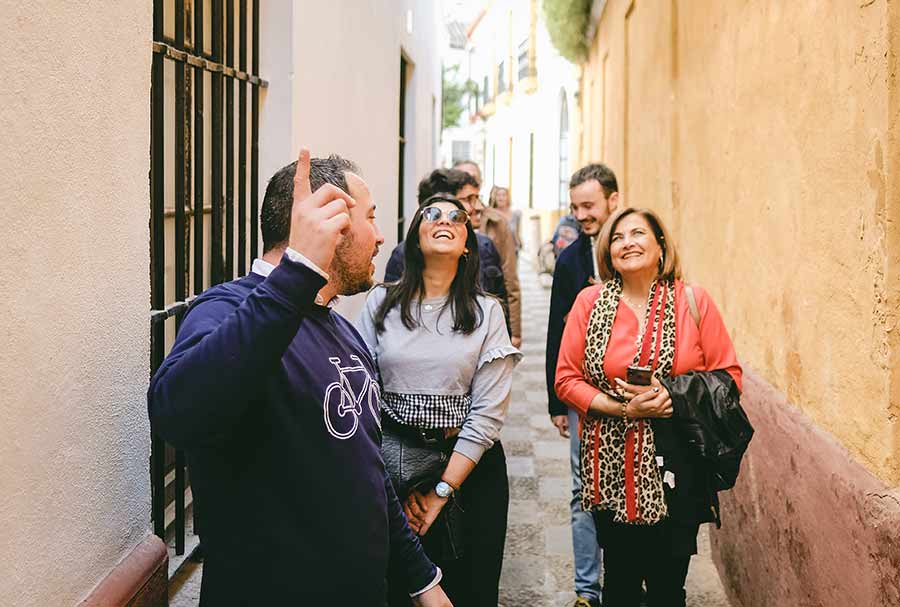
The same applies to neighbourhoods that deserve more than a quick visit. Triana is much more rewarding when you have time to walk along the river, cross the bridge, explore Calle Pureza and the market area and continue deeper into the neighbourhood. Santa Cruz is better when you can wander beyond the two or three streets everybody photographs. Even the relatively short distance between major monuments begins to feel like part of the experience rather than simply a journey from A to B.
This is one of the ideas behind slow travel in Seville. You do not necessarily need more days or a longer itinerary. Sometimes you simply need enough time — and comfortable enough conditions — to notice what is happening between the places you had already planned to visit.
Eating Outside Becomes Part of the Trip Again
Seville’s relationship with food is also closely connected to its streets. Terraces, neighbourhood bars and long conversations over a drink are part of everyday social life, and early autumn is an excellent period to enjoy them without the extremes of midsummer.
This does not mean searching for the restaurant with the biggest terrace in the most touristy square. Some of the best meals in Seville are found a few streets away from the busiest routes, and different neighbourhoods offer very different experiences. Triana, San Lorenzo, Feria, Santa Cruz and the historic centre all have places worth seeking out, from traditional tapas bars to more contemporary restaurants.
We have collected many of the places we genuinely recommend to our guests in our Seville food, culture and local recommendations. It is the same kind of advice we give at the end of our tours, and it is designed to help you continue exploring the city independently rather than sending everyone to the same handful of famous establishments.
There is also no need to turn every meal into a project. One of the pleasures of visiting Seville at this time of year is precisely being able to stop when somewhere looks inviting, order something small and continue afterwards. Leave some space in your itinerary for decisions you did not make before arriving.
But Autumn Does Not Mean an Empty Seville
There is one misconception worth correcting. Good weather does not automatically mean low season.
September and October can be busy, particularly at the Royal Alcázar and Seville Cathedral. Both are among the city’s essential monuments and capacity is limited, so arriving in autumn does not mean you can safely leave tickets until the last minute. If those visits matter to you, book them before travelling rather than assuming availability will improve simply because summer has ended.
This is especially important at the Royal Alcázar, a monument whose history is far richer than its famous courtyards and gardens. The same principle applies to popular guided experiences: smaller groups necessarily have fewer spaces available, so the trade-off for avoiding a group of thirty or forty people is that ten places can disappear quickly.
If you are still putting your itinerary together, our guide to why planning ahead matters in Seville explains which parts of a trip benefit from advance booking and where it is better to preserve some flexibility. The goal is not to schedule every hour before you arrive. It is to secure the things that are difficult to replace and leave the rest of your trip room to breathe.
September or October: Which Is Better?
If your priority is warmer weather, long evenings and the liveliest transition out of summer, choose September. Be prepared for the possibility of hot days, especially earlier in the month, but you will also find an increasingly active cultural calendar. In 2026, the Bienal de Flamenco makes September particularly interesting.
Choose October if comfortable walking temperatures are more important and you do not mind a slightly greater chance of rain. It is an excellent month for building a trip around neighbourhoods and outdoor exploration while still combining them with the Cathedral, Alcázar, museums and the city’s cultural programme.
There is no universally perfect month, of course. Spring brings Semana Santa, Feria and orange blossom; winter has its own atmosphere and can be remarkably mild; summer rewards travellers who know how to adapt to the heat. But for visitors who want to combine monuments, neighbourhoods, food, culture and plenty of time on foot, September and October offer one of the most balanced versions of Seville.
Experience Seville at Walking Pace
Perhaps the greatest advantage of visiting at this time of year is that you do not have to choose between seeing Seville and experiencing it. The monuments remain essential, but the journey between them starts to matter just as much: a street you had not planned to take, a neighbourhood you decide to explore for another hour, or a conversation that makes lunch last longer than expected.
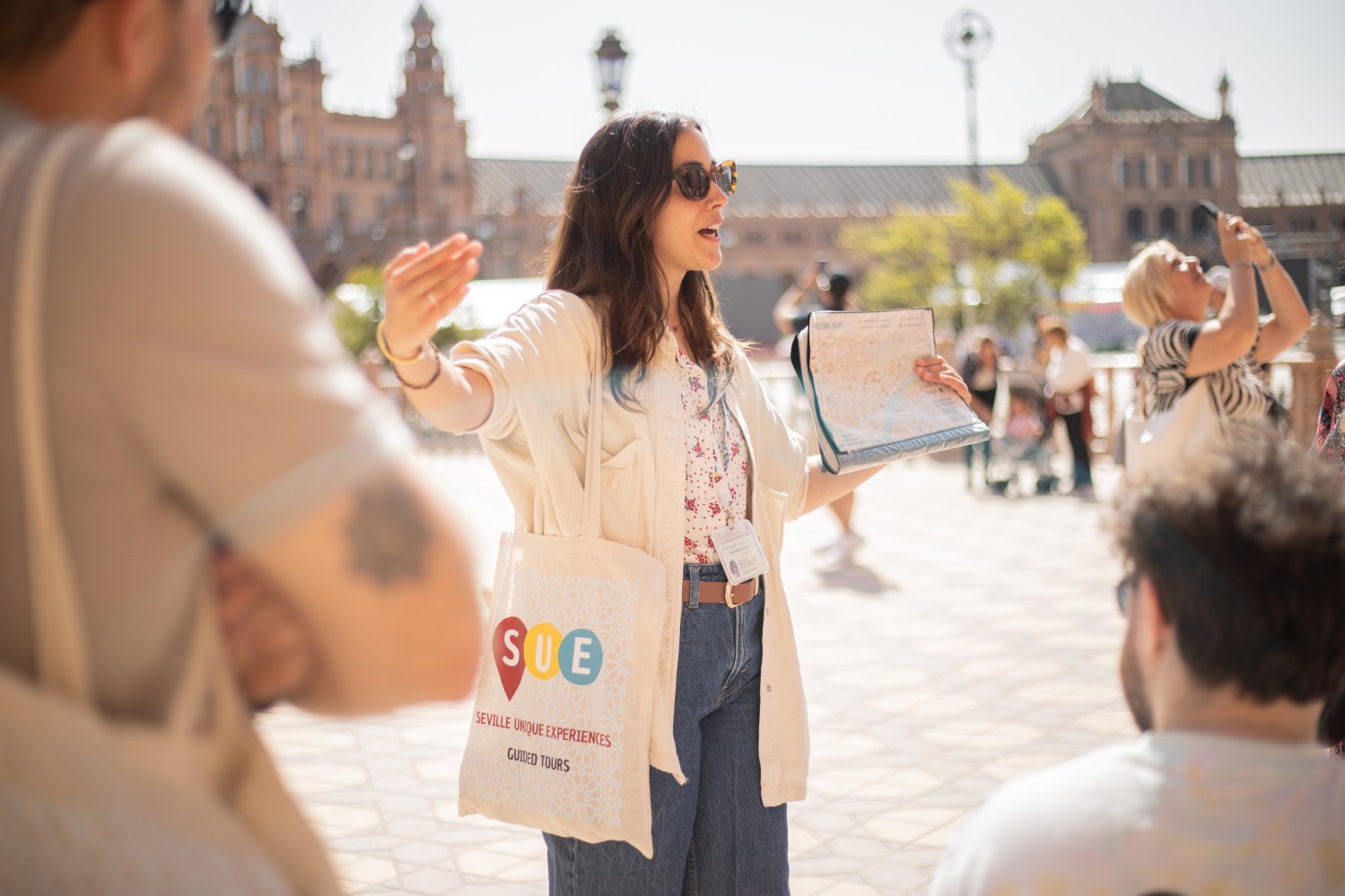
That is also the philosophy behind our experiences at Seville Unique Experiences. Our regular tours are conducted in English and limited to a maximum of 10 guests, allowing us to explore the city through conversation rather than simply moving a crowd from one stop to another. From the Alcázar and Cathedral to Santa Cruz, Triana and the monumental area around Plaza de España, each experience is designed to give you the context to understand what you are seeing while leaving room to actually enjoy being there.
Autumn makes that approach particularly rewarding. Seville is a city made for walking, but it becomes an even better one when the weather finally encourages you to keep going.
