
THE ROYAL ALCÁZAR OF SEVILLE: 6 FASCINATING STORIES BEHIND ONE OF SPAIN’S GREATEST PALACES
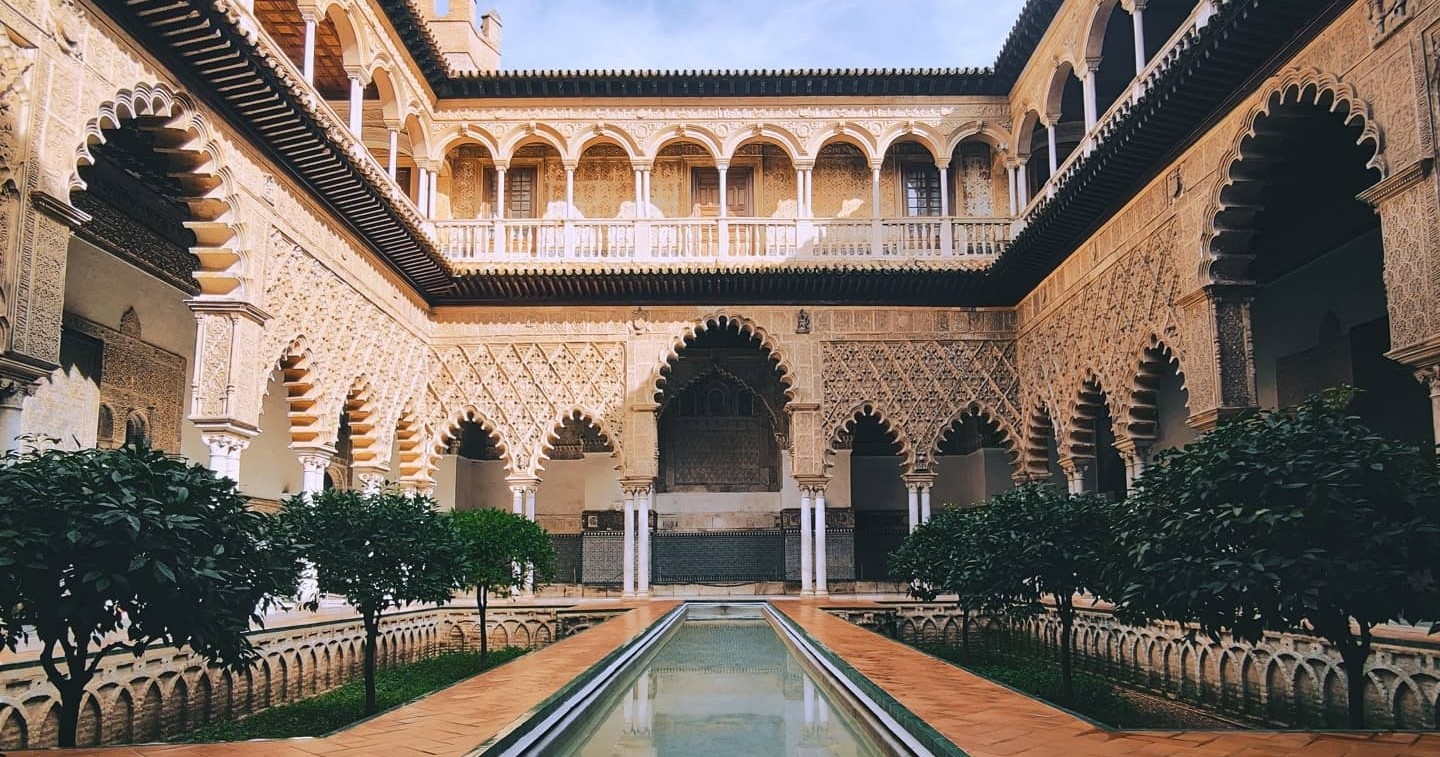
The Royal Alcázar of Seville: The Stories Most Visitors Never Hear
Every year, millions of people walk through the gates of the Royal Alcázar of Seville, admiring its elegant courtyards, intricate plasterwork and lush gardens. It consistently ranks among Spain’s most visited monuments and is often described as one of the highlights of any trip to Andalusia. Yet despite its popularity, many visitors leave without fully understanding what makes the Alcázar unlike any other royal residence in Europe.
Its beauty is immediately obvious. Its history is not.
Unlike palaces that were designed and built during a single period, the Royal Alcázar is the result of almost a thousand years of continuous transformation. Each generation inherited what came before and chose to adapt it rather than erase it. Islamic rulers expanded earlier fortifications, Christian monarchs embraced artistic traditions that originated under Al-Andalus, Renaissance architects introduced new ideas without completely replacing medieval spaces, and modern restorations continue to preserve this remarkable dialogue between cultures. Walking through the Alcázar is therefore less like visiting a single monument and more like reading the architectural history of Seville itself.
This is one of the reasons why the palace rewards visitors who slow down. The first impression is naturally visual, but the details hidden within its walls tell a much richer story. Arabic inscriptions carved into plaster, ceilings that symbolise political power, gardens designed as sophisticated engineering projects rather than decorative spaces and rooms that continue to host members of the Spanish Royal Family all reveal different chapters of a building that has never stopped evolving.
Many of these stories are easy to overlook, particularly during a first visit. After all, there is a natural temptation to focus on taking photographs of the Patio de las Doncellas, the colourful ceramic tiles or the famous gardens. Yet some of the palace’s most fascinating features are the ones that visitors rarely notice without a little historical context.
If you are still organising your visit, our article on why planning ahead is essential for visiting Seville explains why booking in advance can make a significant difference, especially during spring and autumn when demand is at its highest. Likewise, understanding the palace becomes even more rewarding when explored at a slower pace, something we discuss in our guide to slow travel in Seville.
Rather than presenting a list of curiosities, this article explores some of the stories that have shaped the Royal Alcázar over the centuries. Together, they help explain why this extraordinary palace continues to fascinate historians, architects and travellers from around the world.
1. It Is the Oldest Royal Palace in Europe Still Used by a Royal Family
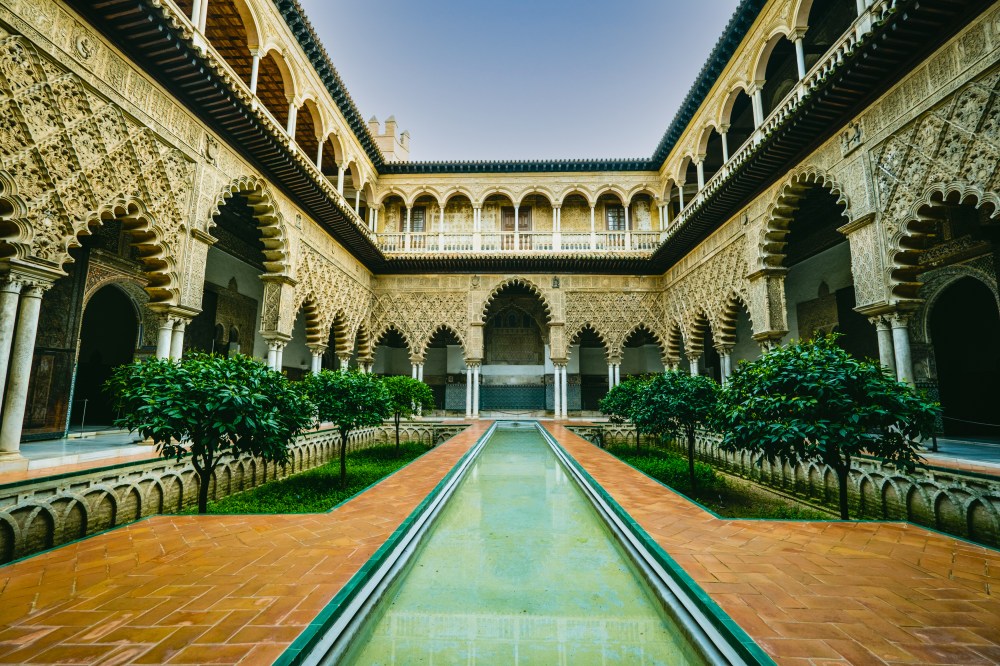
One of the most remarkable aspects of the Royal Alcázar is something many visitors never realise during their visit. While countless historic palaces across Europe have become museums or ceremonial buildings, the Alcázar has never completely lost its original purpose. It remains the oldest royal palace in Europe that is still used by a reigning royal family, serving as the official residence of the Spanish Royal Family whenever they are in Seville.
This continuity is extraordinary because it connects almost a thousand years of political history without interruption. Although the palace has changed dramatically since its earliest Islamic foundations, it has always remained closely linked to those who governed the city and, later, the kingdom. Kings, queens, ambassadors, military leaders and foreign dignitaries have all walked through the same courtyards that visitors explore today. Few monuments in Europe can claim such an unbroken relationship between past and present.
The building itself reflects this continuity. Rather than freezing the palace at a particular moment in history, successive generations adapted it to suit changing needs while respecting many of its earlier features. This explains why Islamic decorative traditions coexist with Gothic, Renaissance and Baroque additions, creating an architectural landscape unlike any other royal residence on the continent. Every period left its mark without completely erasing the one before it.
For visitors, this also changes the way the palace should be understood. The Royal Alcázar is not simply a collection of beautiful rooms preserved behind glass. It remains part of Spain’s institutional life and continues to host official receptions and royal events when members of the Royal Family stay in Seville. In that sense, it is not only a monument to history but also a living palace whose story is still being written.
Those interested in learning more about the monument’s current role, conservation work and visitor information can consult the official Royal Alcázar website. Meanwhile, travellers wishing to understand how each architectural period fits into the wider history of Seville often find that visiting with historical interpretation transforms the experience.
2. The Palace Was Never Designed to Look the Way It Does Today
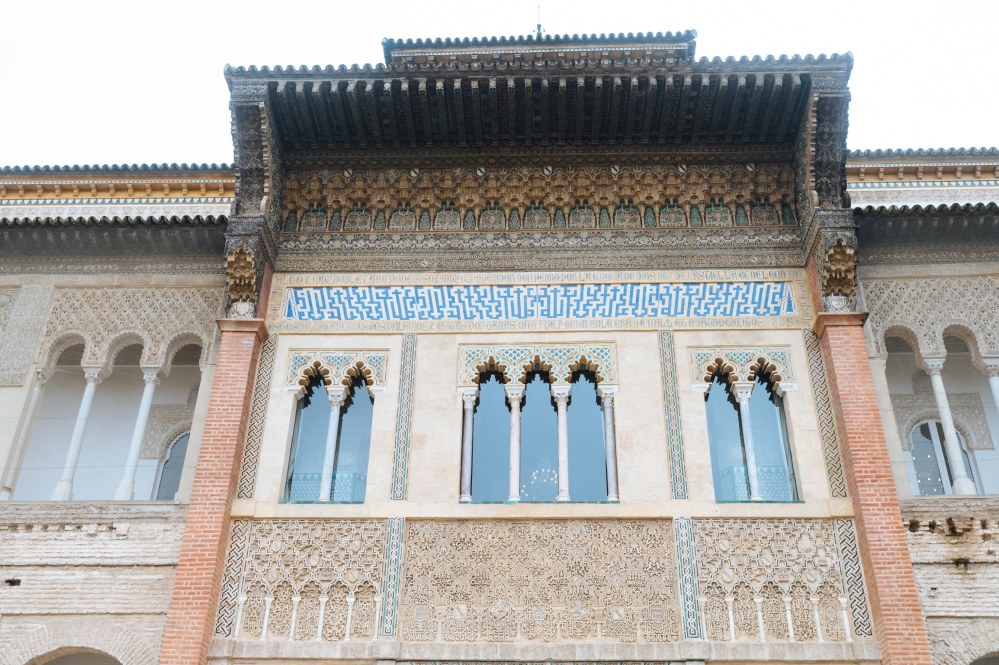
One of the greatest misconceptions about the Royal Alcázar is the idea that it was designed by a single architect or built during a single historical period. In reality, the palace is the product of almost one thousand years of continuous transformation, making it one of Europe’s most fascinating examples of architectural evolution.
Its origins date back to the early Islamic period, when Seville became one of the principal cities of Al-Andalus. The first rulers established fortified residences on the site, taking advantage of its strategic location near the city walls. Over the following centuries, successive dynasties—including the Abbadids and later the Almohads—expanded and refined the complex, adding new palaces, gardens, defensive structures and ceremonial spaces that reflected the growing importance of Seville within the Islamic world.
Everything changed politically in 1248, when King Ferdinand III conquered the city. In many parts of medieval Europe, such a conquest would have led to the destruction of the previous rulers’ palaces and the construction of entirely new buildings. Seville followed a remarkably different path. Rather than erasing what already existed, the Christian monarchy chose to preserve large sections of the Islamic palace while adapting it to its own needs.
The best example of this philosophy is the magnificent palace commissioned by King Peter I during the fourteenth century. Although built for a Christian monarch, much of its decoration was created by Muslim craftsmen using traditional techniques that had been perfected over generations. The result is one of the finest surviving examples of Mudéjar architecture, a uniquely Iberian artistic style that blends Islamic craftsmanship with Christian patronage.
The palace continued to evolve after Peter I. The Catholic Monarchs introduced new residential spaces, the Habsburg dynasty added Renaissance elements and later centuries brought further modifications, restorations and conservation work. Each generation left its own mark while preserving much of what had already been built, creating a building that feels less like a monument frozen in time and more like a living historical document.
Perhaps that is why the Royal Alcázar feels so different from many other European palaces. Visitors are not walking through the vision of a single ruler or architect. They are experiencing nearly a millennium of political change, artistic dialogue and cultural continuity, all contained within one extraordinary complex.
3. The Gardens Were Designed as Carefully as the Palace Itself
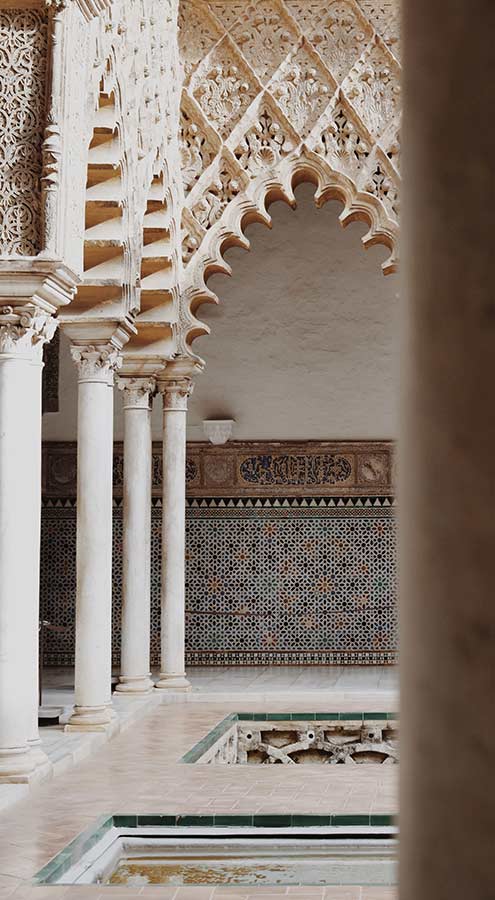
Many visitors leave the Royal Alcázar convinced that the gardens are simply a beautiful place to relax after exploring the palace. While they certainly offer one of the most peaceful walks in Seville, they were never intended to function as decorative green spaces alone. Every path, fountain, pond and shaded corner forms part of a carefully planned landscape where architecture, engineering and nature work together.
Water plays the central role in this design. Long before modern cooling systems existed, the movement of water helped regulate temperature throughout the palace while creating reflections that enhanced the surrounding architecture. Fountains were positioned not only for visual effect but also to provide sound, masking the noise of daily activity and creating an atmosphere of calm that visitors continue to appreciate today.
The gardens also demonstrate the sophisticated hydraulic knowledge inherited from the Islamic world. Water had to be collected, distributed and maintained with remarkable precision, allowing pools, channels and fountains to operate throughout the complex. This engineering achievement was as important as the architecture itself and remains one of the reasons why the gardens continue to flourish centuries later.
Shade was another essential element of the design. Orange trees, palm trees, cypress avenues and carefully positioned vegetation created natural refuges from Seville’s intense summer temperatures. Rather than treating the climate as an obstacle, the designers worked with it, creating outdoor spaces that remained comfortable even during the warmer months of the year.
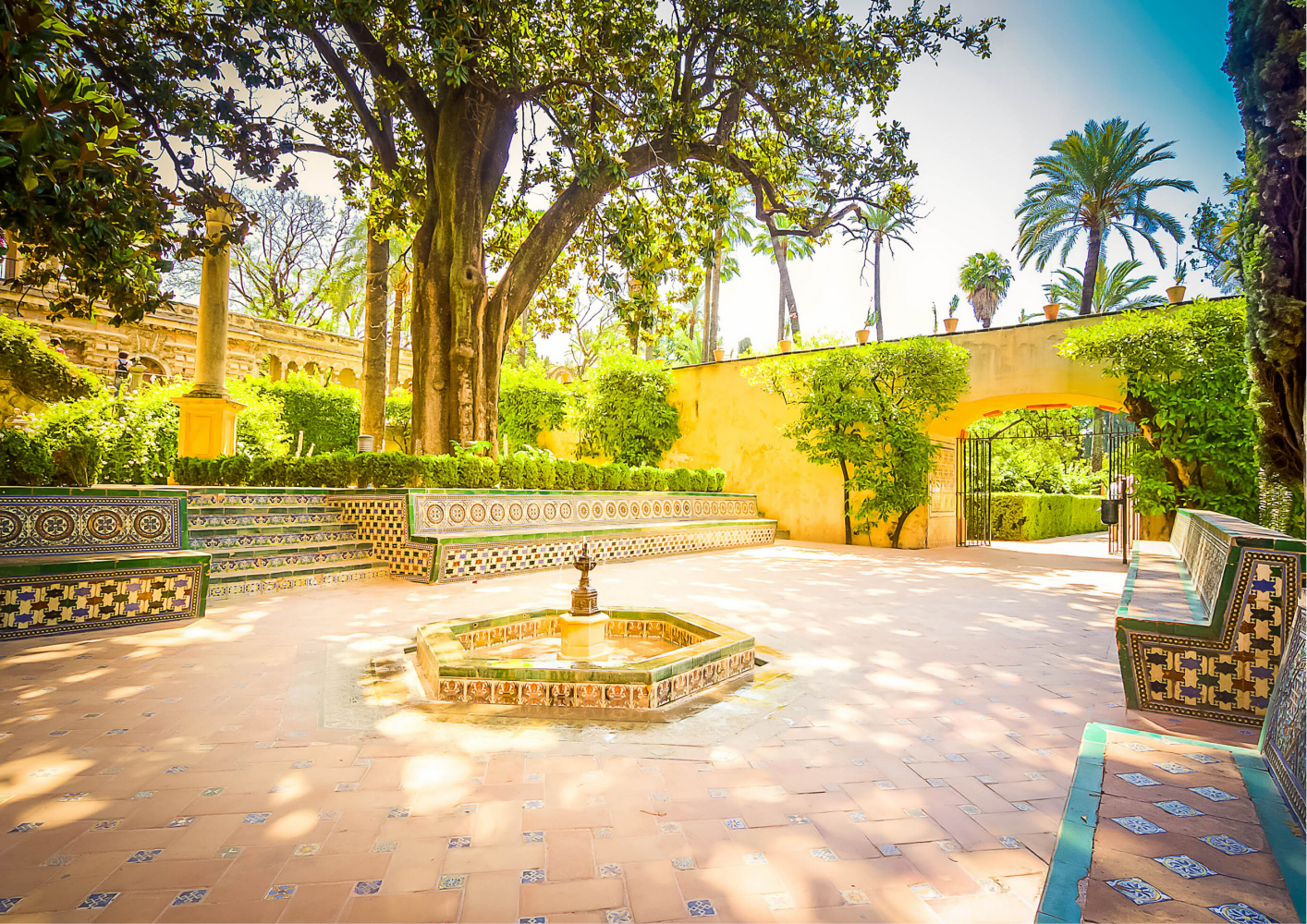
Visitors who slow their pace often notice that the gardens constantly change as they move through them. Some areas feel intimate and enclosed, while others suddenly open onto broad perspectives filled with light. Narrow paths lead towards hidden fountains, ornamental pavilions and quiet corners where the city seems to disappear completely. This gradual sequence of spaces was carefully planned to encourage movement, surprise and contemplation rather than simply providing a route from one part of the palace to another.
It is no coincidence that many people remember the gardens as vividly as the palace itself. They are not an addition to the Royal Alcázar; they are one of its defining architectural elements. Understanding that relationship transforms the visit, revealing that some of the monument’s greatest achievements are found not only inside its magnificent halls but also beneath the shade of its trees and beside the quiet sound of running water.
4. Some of the Palace’s Greatest Works of Art Are Above Your Head
Most visitors naturally focus on what is directly in front of them. The colourful ceramic tiles, the elegant arches, the carved plasterwork and the courtyards immediately capture the eye. Yet one of the most remarkable aspects of the Royal Alcázar often goes unnoticed simply because people forget to look up.
The palace’s ceilings are among the finest examples of decorative craftsmanship in Spain, and each one was designed to communicate something about the space beneath it. Some celebrate royal authority, others create the illusion of infinite height, while many demonstrate an extraordinary level of technical skill that continues to impress historians and conservators alike.
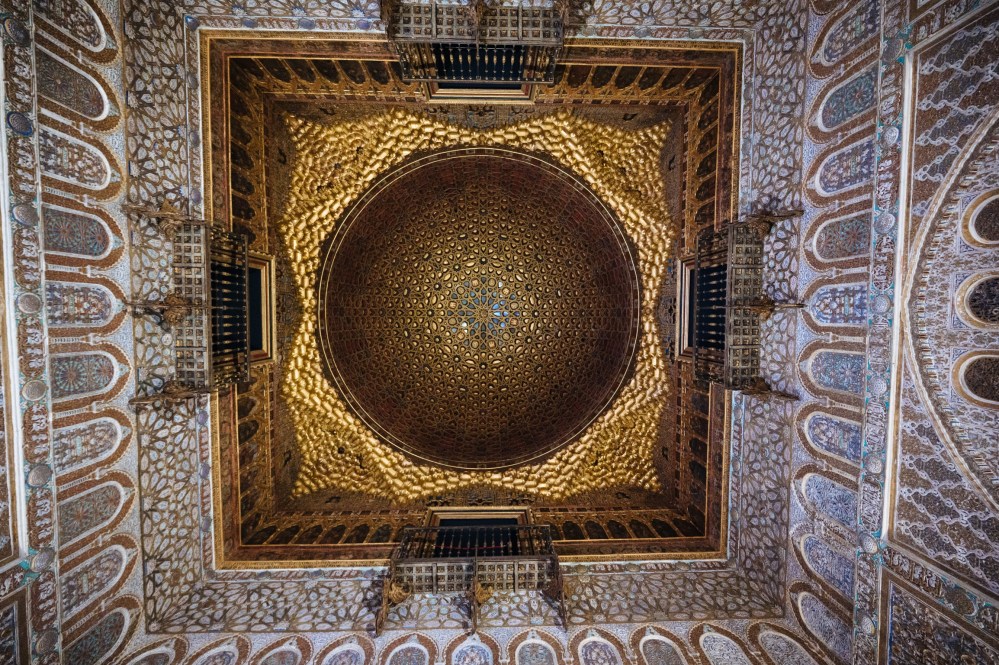
Perhaps the most spectacular example is the magnificent dome inside the Hall of Ambassadors. Constructed from thousands of precisely assembled wooden pieces, its geometric composition creates the impression of a golden sky suspended above the room. When sunlight enters through the surrounding windows, the entire ceiling seems to change throughout the day, producing an effect that photographs rarely capture.
Elsewhere in the palace, beautifully carved artesonado ceilings reveal the influence of both Islamic and Christian artistic traditions. Rather than competing with the architecture below, they complete each room, demonstrating that decoration in the Alcázar was never treated as an afterthought. Walls, floors, ceilings and light were conceived together, creating interiors where every element contributes to a single harmonious design.
The next time you visit the Royal Alcázar, pause before leaving each room and spend a few seconds looking upwards. You may discover that some of the palace’s greatest masterpieces have been above your head all along.
5. Game of Thrones Helped the Alcázar Become Famous Again — But Its Real Story Is Even Better
For many international visitors, the Royal Alcázar first appeared on their radar thanks to Game of Thrones. In the fifth season of the series, the palace became the Water Gardens of Dorne, introducing millions of viewers to one of Seville’s most spectacular monuments.
The filming undoubtedly increased the Alcázar’s international profile, particularly among travellers who had never previously considered visiting Seville. Even today, many visitors enjoy recognising courtyards and gardens that appeared on screen, and it is easy to understand why the producers selected the palace. Few locations combine such rich architectural detail with gardens that feel both elegant and timeless.
Yet reducing the Royal Alcázar to a filming location would mean overlooking the reason it attracted filmmakers in the first place. Long before television cameras arrived, the palace had already spent centuries inspiring artists, travellers, historians and architects from across Europe. Its extraordinary atmosphere was not created for cinema; cinema simply recognised a place that had fascinated people for generations.
In many ways, the Alcázar’s real history is even more compelling than fiction. Few buildings have witnessed the coexistence of Islamic and Christian cultures, the ambitions of medieval kings, the expansion of the Spanish monarchy and the evolution of artistic traditions across nearly a thousand years while continuing to fulfil their original function.
For visitors, Game of Thrones can be an entertaining point of reference, but it should ideally become the beginning of the story rather than the end of it. The palace rewards curiosity far beyond the scenes that appeared on television, revealing a history whose richness could never be condensed into a few minutes of screen time.
If you enjoy discovering the stories behind historic places rather than simply recognising famous locations, our Royal Alcázar Small-Group Tour explores the people, architecture and historical events that have shaped the palace over the centuries, placing every courtyard and room within the wider history of Seville.
6. The Royal Alcázar Rewards Those Who Slow Down
After visiting the Royal Alcázar, many travellers remember the same spaces: the Patio de las Doncellas, the Hall of Ambassadors or the beautiful gardens. These are undoubtedly among the palace’s highlights, but they are only part of what makes the monument so memorable. The visitors who leave with the deepest appreciation are rarely those who saw the most. More often, they are the ones who took the time to notice the details that are easily missed.
The Royal Alcázar is not a monument that reveals everything immediately. Its beauty unfolds gradually. A carved Arabic inscription that suddenly catches your eye, the changing reflections in a courtyard pool, the silence of a shaded garden or the craftsmanship of a wooden ceiling all become far more meaningful once you stop thinking about what comes next and begin paying attention to where you are.
This is one of the reasons why so many people leave feeling that they could happily visit the palace again. Unlike monuments that can be fully appreciated in a single walk-through, the Alcázar continues to reveal new perspectives every time you return. The changing seasons alter the gardens, the light transforms the colours of the plasterwork throughout the day and every room offers details that are almost impossible to absorb during a single visit.
Understanding the Royal Alcázar is therefore not about memorising historical dates or identifying architectural styles. It is about recognising that this extraordinary place represents centuries of cultural exchange, artistic ambition and political history, all brought together within a palace that continues to evolve even today.
For visitors who enjoy exploring monuments at a slower pace and with historical context, our article on why small-group tours make a huge difference in Seville explains why conversation and interpretation often transform the way places like the Alcázar are experienced.
Final Thoughts
Few monuments tell the story of Seville as completely as the Royal Alcázar. Its walls preserve almost a thousand years of political change, artistic innovation and cultural dialogue, making it far more than a collection of beautiful buildings. Every courtyard, garden and ceremonial room reflects the decisions of the people who shaped the city across different centuries, often choosing to preserve what came before rather than replace it.
Perhaps that is why the Alcázar continues to fascinate visitors long after they have returned home. It is not simply the elegance of its architecture or the tranquillity of its gardens that leaves such a lasting impression. It is the realisation that this is a place where history has accumulated rather than disappeared, allowing different cultures, artistic traditions and generations of rulers to leave visible traces of their presence.
Whether you are visiting Seville for the first time or returning to explore it in greater depth, the Royal Alcázar deserves far more than a quick stop on a busy itinerary. Giving yourself enough time to observe, ask questions and appreciate the countless details hidden throughout the complex often becomes one of the most rewarding moments of an entire trip.