
BEST THINGS TO DO IN SEVILLE: WHAT TO SEE, DO AND EXPERIENCE
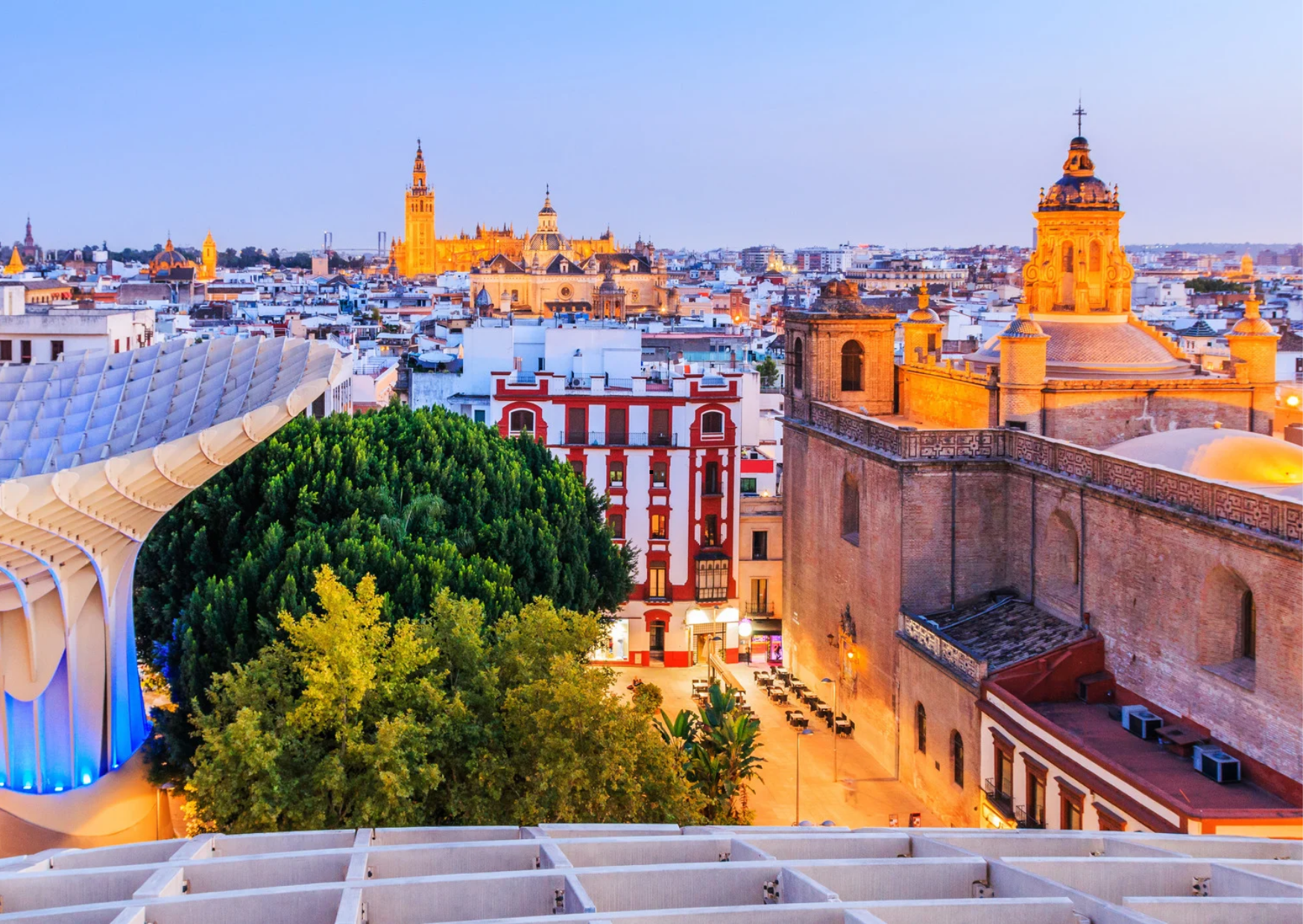
Seville is a city where some of Spain’s most impressive monuments sit within walking distance of lively neighbourhoods, traditional tapas bars, historic markets and quiet streets that are just as rewarding to explore.
For a first visit, the best things to do in Seville include exploring the Royal Alcázar, visiting Seville Cathedral and climbing the Giralda, walking through the historic Jewish Quarter, discovering Plaza de España and María Luisa Park, and crossing the river into Triana. But experiencing Seville properly also means looking beyond its most famous landmarks.
The city is compact enough to explore largely on foot, yet there is far more to see than most visitors can fit into a single day. Deciding what to see and do in Seville, what deserves the most time and which attractions need to be booked in advance can make a considerable difference to your trip.
In this guide, we have brought together the places and experiences we believe are most worth your time, combining Seville’s essential sights with neighbourhoods, food, local culture and some less obvious ways to discover the city. We will also explain what to book ahead, how long to allow and which places work particularly well together, helping you plan your visit without turning it into a race from one attraction to the next.
This is not intended as a checklist of dozens of things to squeeze into your stay. Seville is better experienced at a slower pace, with enough time to understand what you are seeing, stop somewhere that catches your attention and enjoy the city between the monuments.
The Royal Alcázar: Seville’s Essential Historic Monument
If you only have time for a few major sights, the Royal Alcázar of Seville should be near the top of your list. Still used as a royal residence today, the palace complex brings together centuries of Seville’s history through Islamic, Mudéjar, Gothic and Renaissance architecture, as well as extensive gardens that deserve time of their own.
The Alcázar is not simply one palace. As you move through the complex, you pass between very different spaces, from the intricate decoration of the Palace of Pedro I to the Gothic Palace, courtyards, halls and gardens that reflect the many periods in which the site was expanded and transformed.
It is also one of the places in Seville where understanding the historical context makes a particularly noticeable difference. Many of the details visitors see — Arabic inscriptions, decorative plasterwork, tiles, architectural changes and royal symbols — tell a much richer story when you understand why they are there and who created them.
For that reason, we recommend allowing around two hours for the palaces and main historic areas, followed by additional time to explore the gardens at your own pace. There is no need to rush straight to the exit once the guided or indoor part of your visit is finished.
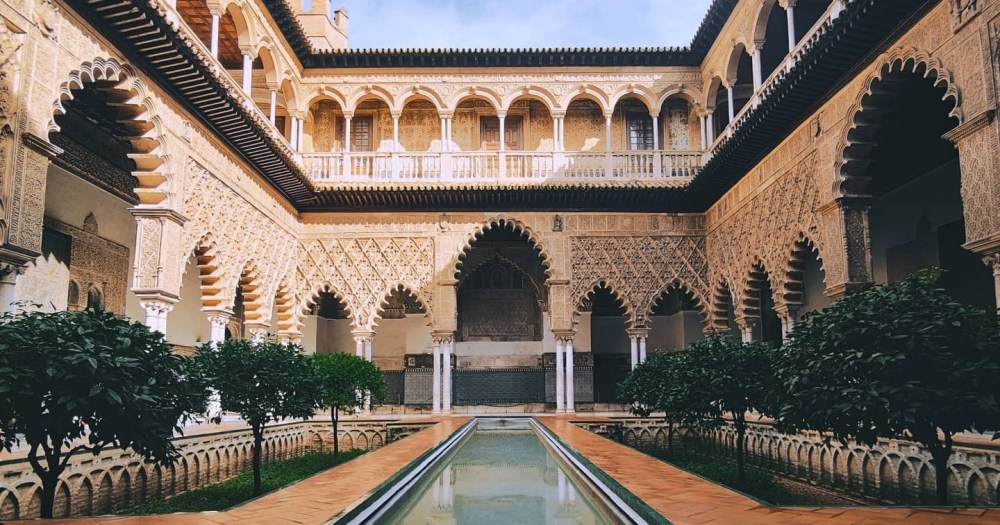
One thing is particularly important when planning your visit: book the Alcázar in advance. Entry is controlled through timed tickets, and popular dates and times can sell out, especially during the busiest periods of the year. Waiting until you arrive in Seville can mean finding very limited availability — or none at all for the day you wanted to visit.
If you would like to understand the palace rather than simply walk through it, our Exclusive Alcázar Small-Group Tour explores the complex with an expert local guide in a group limited to a maximum of 10 guests. The guided visit lasts around two hours, and afterwards you can remain inside and explore the gardens independently for as long as the monument’s opening hours allow.
Practical tip: bring the same passport or ID details used for your ticket, as Alcázar tickets are personalised. And if you are visiting during periods of bad weather, bear in mind that access to the gardens can occasionally be restricted or closed.
Seville Cathedral and the Giralda: History on a Monumental Scale
Just a few steps from the Alcázar stands another of Seville’s essential landmarks. Seville Cathedral is one of the largest Gothic churches in the world, built on the site of the city’s former main mosque after the Christian conquest of Seville.
Its scale is impressive, but some of its most interesting details are easier to miss. Inside you will find an extraordinary main altarpiece, numerous chapels and works of art, as well as the monumental tomb associated with Christopher Columbus. Parts of the earlier mosque also survive within the complex, most notably the Patio de los Naranjos and the lower sections of the Giralda.
The Giralda is one of the defining symbols of Seville. Originally constructed as the minaret of the Almohad mosque in the 12th century, it was later transformed into the Cathedral’s bell tower. Instead of a conventional staircase, much of the ascent is made using ramps, historically designed to make access to the upper sections easier.
Reaching the top rewards you with some of the best views over Seville’s historic centre, making the climb an important part of the visit rather than simply an addition to the Cathedral.
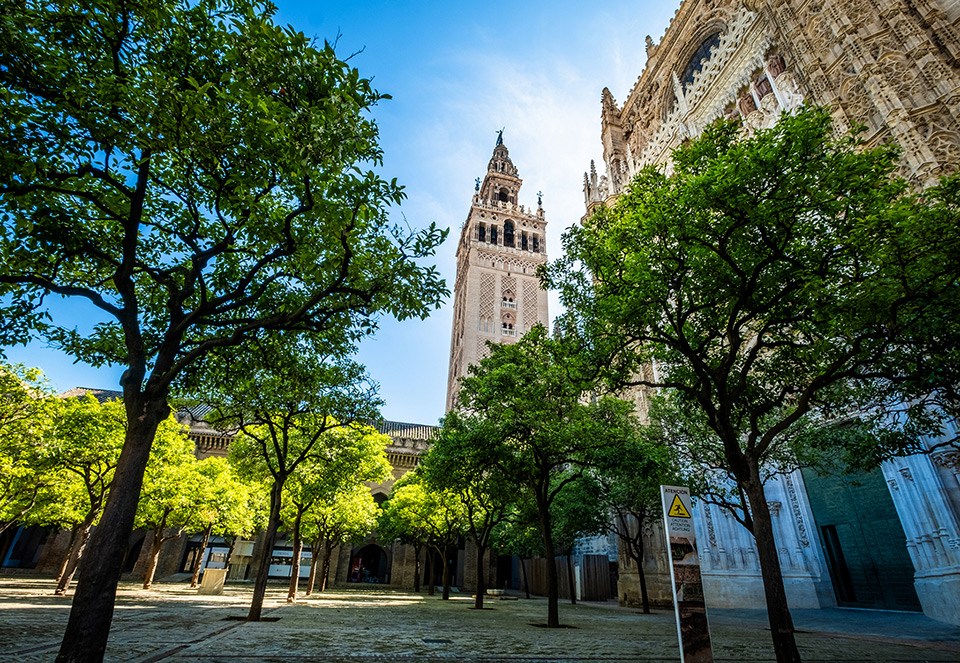
As with the Alcázar, booking ahead is strongly recommended. The Cathedral is one of Seville’s most visited monuments, and planning your entry in advance gives you much more control over how the rest of your day fits together.
Allow approximately two hours to visit the Cathedral and climb the Giralda without rushing. Remember that this is also an active place of worship, so appropriate clothing is required when entering.
If you would like to explore the monument with historical context, our Seville Cathedral & Giralda Small-Group Tour takes you through the Cathedral’s history, architecture and most important spaces before including the ascent of the Giralda. As with our other regular experiences, groups are limited to a maximum of 10 guests.
The Cathedral and Alcázar sit almost beside one another, but we would not recommend trying to race through both. These are two of Seville’s most important historic sites, and each deserves enough time to be properly understood.
Explore Seville’s Historic Jewish Quarter
Between the Alcázar and the eastern side of the historic centre lies an area that many visitors know simply as Santa Cruz. Its narrow streets, small squares, orange trees and hidden courtyards make it one of the most enjoyable parts of Seville to explore on foot — but its history extends well beyond the picturesque neighbourhood visitors see today.
Seville’s medieval Jewish Quarter, or Judería, once covered a larger area that also included parts of present-day San Bartolomé and the surroundings of Santa María la Blanca. For centuries, a significant Jewish community lived here alongside the wider population of the city, leaving a history that is much more complex than the romantic image of Santa Cruz sometimes suggests.
Unlike the Alcázar or Cathedral, there is no single monument that explains this story. Understanding the Jewish Quarter means looking for traces scattered throughout the neighbourhood: former synagogues, changes in the street plan, archaeological remains and places connected with both documented history and local legends.
That makes this one of the areas of Seville where simply wandering is rewarding, but knowing what you are looking at can completely change the experience.
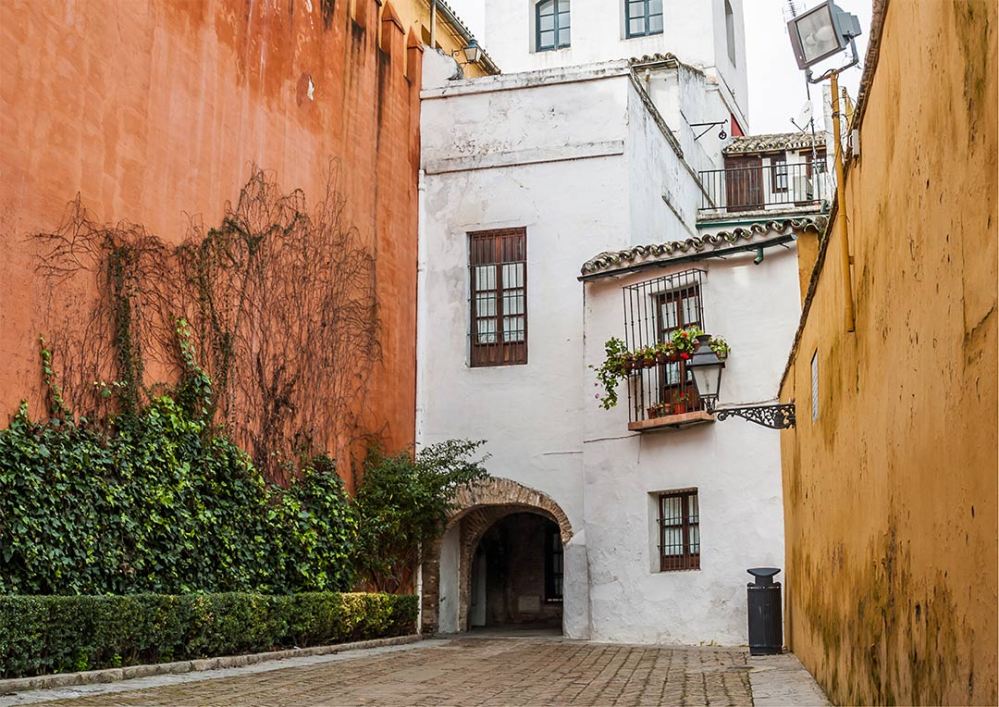
Allow at least an hour or two to explore the area without rushing. Santa Cruz is particularly pleasant in the morning or towards the end of the afternoon, when it is easier to leave the busiest streets behind and discover some of its quieter corners.
If you want to understand what remains of the medieval Jewish presence rather than simply walk through Santa Cruz, our Jewish Quarter Discovery Walk explores the history of the Judería in a small group, including some of the physical traces and lesser-known places that are easy to overlook when visiting independently.
We have also written a more detailed guide to Seville’s Jewish Quarter, its history and what you can still see today, which is worth reading if you would like more historical context before exploring the neighbourhood.
And if you would prefer to combine history with another important part of life in Seville, our Jewish Quarter with Tapas & Drinks continues the experience around the table, with tapas and drinks after exploring the neighbourhood.
Plaza de España and María Luisa Park
Few places are as immediately recognisable as Plaza de España, and for many visitors it becomes one of the highlights of their time in Seville. Built for the Ibero-American Exposition of 1929, the enormous semicircular square combines brick, ceramic tiles, bridges, towers and a canal in one of the city’s most ambitious architectural ensembles.
Look closely at the tiled alcoves running around the square and you will find representations of Spain’s provinces, while the bridges crossing the canal are decorated with colourful ceramics. These details are worth exploring rather than simply stopping in the centre for a photograph.
Plaza de España has also become internationally familiar through cinema. It famously appeared as Naboo in Star Wars: Episode II – Attack of the Clones, and the square has featured in other major productions filmed in Seville.
Just beside it lies María Luisa Park, one of the best places to slow down after exploring the historic centre. Its shaded paths, fountains, gardens and monumental spaces make it particularly welcome on warmer days.
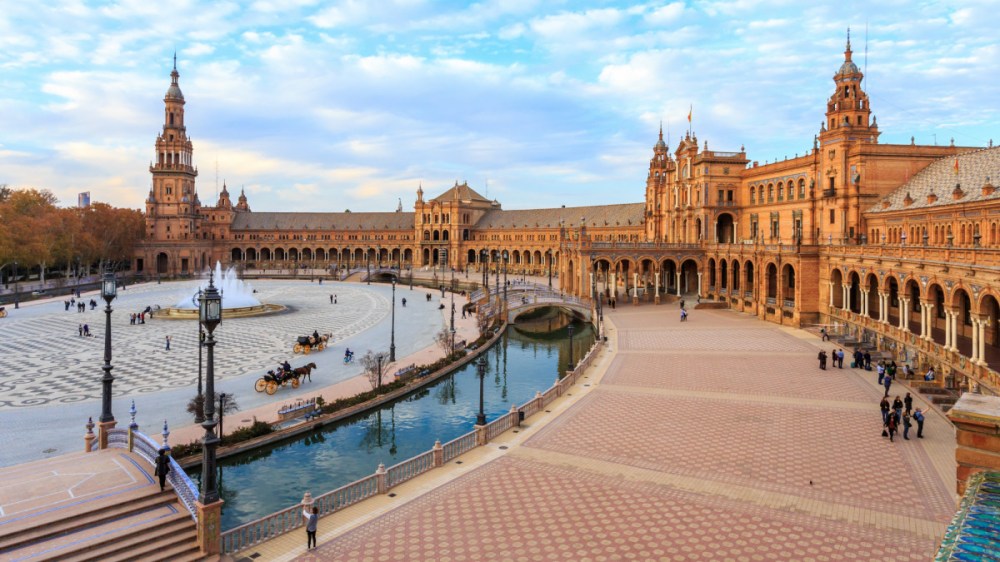
Allow around 45 minutes to an hour for Plaza de España, and longer if you also want to wander through María Luisa Park. Both are free to explore, making this an easy part of your itinerary to combine with other sights.
One of the best ways to reach this part of the city is on foot from the historic centre. The route can take you past Puerta de Jerez, the San Telmo Palace, the former Royal Tobacco Factory and the Guadalquivir riverfront, turning the journey itself into part of the sightseeing.
That is also the idea behind our Monumental Seville Highlights walk. Rather than focusing on the interiors of ticketed monuments, the experience connects many of Seville’s major outdoor landmarks and their stories, finishing around the Plaza de España and María Luisa Park area. It is particularly useful at the beginning of a stay, when getting a sense of how the city fits together can make the following days easier to plan.
If Plaza de España looks strangely familiar, you can also explore our guide to movies and TV shows filmed in Seville, where we look at this and other real filming locations around the city.
Cross the River and Discover Triana
Cross the Isabel II Bridge, better known locally as the Triana Bridge, and Seville immediately begins to feel different. Triana has a strong identity of its own, shaped by the Guadalquivir River, generations of ceramic workshops, popular traditions and a particularly important connection with the history of flamenco.
For centuries, the river was central to life in this part of the city. Sailors, artisans, potters and other working communities all contributed to Triana’s character, while its location outside the old city walls helped it develop an identity that remains visible today.
Start around Plaza del Altozano, just across the bridge, before exploring the surrounding streets. Nearby, the Triana Market occupies part of the site of the former Castle of San Jorge, once associated with the Spanish Inquisition. From there, streets such as Calle San Jacinto and Calle Pureza lead deeper into the neighbourhood.
Triana is also inseparable from Seville’s ceramic tradition. Pottery workshops and factories operated here for centuries, producing many of the colourful tiles that decorate churches, palaces, patios and façades throughout the city. The Centro Cerámica Triana provides more context for travellers particularly interested in this heritage.

But perhaps Triana’s most famous cultural association is with flamenco. The neighbourhood played an important role in its development, particularly through its historic Roma community and the singers, dancers and families who helped shape flamenco traditions over generations. Today, flamenco is performed throughout Seville, but understanding Triana’s history adds another layer to that connection.
Do not overlook the river itself. Walking along Calle Betis and the Guadalquivir riverfront gives you some of the best views back towards Seville’s historic centre, particularly later in the day. Triana works well precisely because there is no single attraction you need to rush towards: the neighbourhood is best experienced by combining its streets, history and riverfront.
If you would like more context while exploring, our River & Triana Small-Group Walking Tour follows the Guadalquivir before crossing into Triana, connecting the neighbourhood’s history with ceramics, flamenco, the Inquisition and some of the places that have shaped its identity.
Triana is also an excellent area to explore through food. Its market and traditional bars make it easy to combine sightseeing with lunch or tapas, and our Seville food guide looks more closely at the city’s markets, tapas culture and local food experiences.
Experience Seville Through Its Food
Some of the best experiences in Seville happen around a table. Tapas are not simply a collection of small dishes but part of the city’s social culture, and making time to eat well is as much a part of visiting Seville as exploring its monuments.
Traditional dishes vary from bar to bar, but you may come across classics such as espinacas con garbanzos, carrillada, papas aliñás, pringá, fried or marinated fish and seasonal vegetables, alongside jamón ibérico, cheeses and other products from across Andalusia.
The way you eat matters too. Rather than choosing one restaurant and ordering a conventional three-course meal, try a few tapas, ask what the house does particularly well and consider moving on to another bar afterwards. Exploring two or three places is a great way to experience different streets and neighbourhoods at the same time.
Seville’s traditional markets provide another perspective on local food culture. The markets in Triana, Feria and Encarnación bring together everyday shopping, local produce and neighbourhood life, and can easily be incorporated into a day of sightseeing.

If you want to combine food with some historical context, our Jewish Quarter with Tapas & Drinks begins by exploring the former Jewish Quarter before continuing with tapas, local dishes and drinks together. It is a good option for travellers who would rather experience food as part of discovering the city than take a conventional sightseeing tour followed by a separate meal.
For a deeper introduction to what and how to eat, we have put together a complete food lover’s guide to Seville, covering traditional tapas, local dining habits, markets and culinary experiences around the city.
And perhaps the most useful advice is not to plan every meal before you arrive. Leave room for recommendations and spontaneous discoveries. Some of the most enjoyable food experiences in Seville begin simply because a bar looks interesting as you walk past.
See a Flamenco Show in Seville
Flamenco is deeply connected with Andalusia, and seeing a live performance can be one of the most memorable things to do in Seville. Singing, guitar and dance come together in a form of expression that is much more varied and complex than the image many visitors have before arriving in southern Spain.
Seville has numerous places to experience flamenco, ranging from intimate venues with relatively small audiences to larger tablaos offering more elaborate productions. Rather than choosing solely on price or proximity to your hotel, consider the kind of atmosphere you would prefer. A smaller venue can make it easier to appreciate the singing, guitar and emotion of the performance at close range.
The city’s relationship with flamenco also extends beyond the shows themselves. Neighbourhoods such as Triana have played an important role in its history, while flamenco traditions developed through different communities and places across Seville and the wider region.
You do not need an extensive knowledge of flamenco to enjoy a performance. In fact, seeing it live is often the best introduction: the interaction between singer, guitarist and dancer is much easier to understand when you experience it in the room rather than simply watching individual performances online.

If flamenco is high on your list, reserve your preferred performance in advance, particularly during busy periods and if you want a smaller venue with limited seating. An evening show also fits naturally into a day of sightseeing, leaving the daytime free for monuments and neighbourhoods.
And even if you decide not to attend a performance, learning something about flamenco can add another dimension to exploring Triana. Its history is intertwined with the people and communities who lived there, which is one of the reasons we discuss flamenco as part of our River & Triana Small-Group Walking Tour.
Discover Seville Beyond the Famous Landmarks
The Alcázar, Cathedral and Plaza de España may dominate a first visit, but some of Seville’s character is found in the places you encounter between its headline attractions. Because the historic centre is so walkable, several of these can be discovered naturally rather than treated as separate stops on an itinerary.
Beside the Cathedral stands the Archivo General de Indias, created in the 18th century to bring together documentation relating to Spain’s overseas territories. The building itself dates from the late 16th century and, together with the Cathedral and Alcázar, forms part of Seville’s UNESCO World Heritage Site.
Continue towards the river and you will reach the Torre del Oro, a 13th-century defensive tower that has become one of the most recognisable landmarks along the Guadalquivir. From here, walking south beside the river takes you towards San Telmo Palace and the former Royal Tobacco Factory, today part of the University of Seville.
The Tobacco Factory is particularly interesting for its connection with the fictional world of Carmen. The enormous 18th-century building employed thousands of workers, including the female cigarette makers who helped inspire the setting associated with Prosper Mérimée’s story and, later, Bizet’s opera.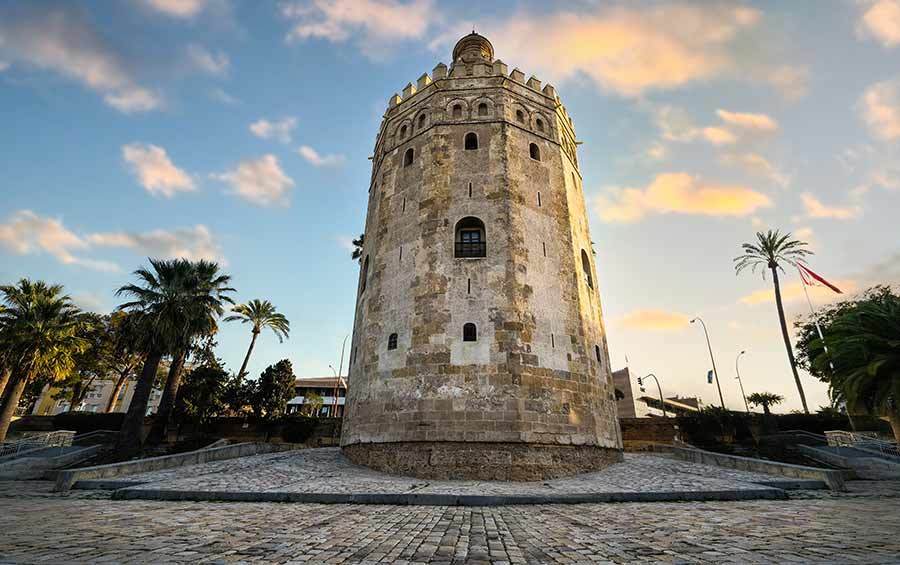
Further into the centre, Seville changes character again around the Metropol Parasol, better known locally as Las Setas. Its contemporary wooden structure rises above Plaza de la Encarnación, where archaeological remains, a traditional food market and one of the city’s most unusual viewpoints coexist in the same space.
The contrast is part of what makes exploring Seville on foot so rewarding. Within a relatively short walk, you can move from medieval palaces and former religious buildings to 18th-century industrial architecture and contemporary landmarks.
You also do not need to enter every building you pass. Choosing a few major monuments and discovering the rest while walking between them often produces a much more enjoyable day than trying to collect as many attractions as possible.
Our Monumental Seville Highlights walk was designed around this idea, connecting many of the city’s major outdoor landmarks — including the Cathedral and Alcázar surroundings, Torre del Oro, San Telmo Palace, the former Tobacco Factory and Plaza de España — while explaining how these places fit into the wider history of Seville.
What Should You Book in Advance in Seville?
If there is one piece of planning advice that can make a real difference to your trip, it is this: do not leave Seville’s major ticketed monuments until the last minute.
The Royal Alcázar and Seville Cathedral are the two attractions we would prioritise booking in advance. Both use timed entry, and availability at convenient times can become limited during busy periods. This is particularly important if you only have two or three days in the city and cannot simply move your visit to another date.
The same principle applies to experiences with limited capacity. Small-group tours, private guides, popular flamenco performances and certain food experiences can also fill up, so reserve anything that is particularly important to you before arrival.
At the same time, there is no need to schedule every hour of your stay. Places such as Plaza de España, María Luisa Park, Triana and the riverfront give you much more flexibility. A good Seville itinerary combines a few advance reservations with enough free time to explore spontaneously.
How Many Days Do You Need in Seville?
For a first visit, three days in Seville is a very good starting point. It gives you enough time to see the major monuments while also experiencing some of the neighbourhoods, food and everyday atmosphere that make the city worth exploring beyond its headline attractions.
With two days, you can still cover many of the essentials, but you will need to plan carefully. With three days, it becomes much easier to combine the Alcázar, Cathedral and historic centre with Plaza de España, Triana, the riverfront and time for tapas or a flamenco performance without constantly watching the clock.
If you have four or five days, even better. You can explore at a slower pace, discover neighbourhoods beyond the main tourist areas and leave space for spontaneous stops rather than filling every day with reservations.
Ultimately, the best Seville itinerary is not necessarily the one that includes the most places. Choose the experiences that matter most to you, book the essentials in advance and leave enough time to enjoy the city between them.
Make the Most of Your Time in Seville
There is no single way to experience Seville. Its great monuments deserve their reputation, but some of the most memorable moments often happen in between: walking through a neighbourhood you had not planned to visit, stopping for tapas, crossing the river at sunset or discovering the story behind a building you might otherwise have passed without noticing.
For a first visit, prioritise the places that interest you most, book the essential ticketed attractions in advance and resist the temptation to fill every hour. Seville is a remarkably walkable city, and leaving space between plans is often what allows you to enjoy it properly.
At Seville Unique Experiences, this is also the way we believe the city is best discovered: in small groups, with knowledgeable local guides and enough time for questions, conversation and the stories that bring each place to life.
If you would like some local guidance during your stay, you can explore our small-group tours and experiences in Seville and choose the part of the city you would most like to discover.